Pumpkin Seeds Near Me Nutrition Benefits and Guide
There is more to choosing pumpkin seeds than finding the nearest packet. Plain seeds naturally provide protein, fibre, unsaturated fats and useful minerals, while roasting, seasoning and portion size can change what eventually reaches your plate. So, when looking for pumpkin seeds near me, checking the product itself matters as much as finding somewhere convenient to buy it. This guide takes a closer look at nutrition, health benefits, portions, storage and different ways to eat pumpkin seeds, alongside the options available from NutsOasis.
What Are Pumpkin Seeds?
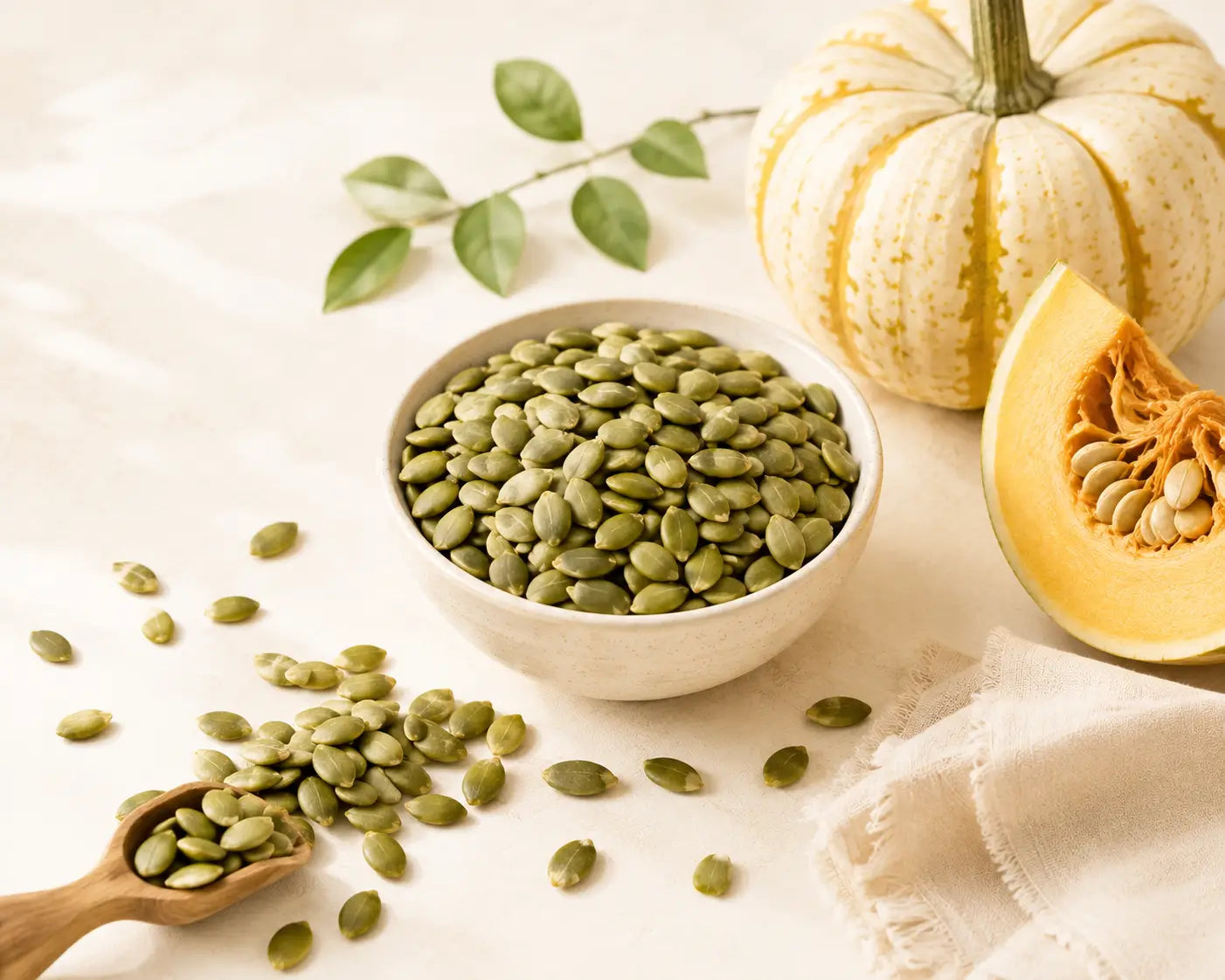
- Pumpkin seeds are the edible seeds found inside pumpkins. They can be eaten whole with their outer hull or as shelled green kernels, often called pepitas, and are commonly enjoyed raw or roasted.
- Nutritionally, they are unusually concentrated for their size, providing plant protein, unsaturated fats, fibre, magnesium, phosphorus, zinc, iron and copper.
- Their magnesium contributes to normal muscle and nerve function, while iron supports normal oxygen transport in the body. When searching for pumpkin seeds near me, choosing plain seeds makes it easier to gain these nutrients without unnecessary salt, sugar or flavour coatings.

Enjoy Our Salted Pumpkin Seeds
Enjoy the satisfying crunch and savoury flavour of our premium Salted Pumpkin Seeds. Perfect for snacking, adding to salads, or bringing extra texture and flavour to your favourite meals.
Shop Salted Pumpkin SeedsKey Nutrients of Pumpkin Seeds (per 30g):
| Nutrient | Approx. per 30g |
|---|---|
| Energy | 168 kcal |
| Protein | 9.1 g |
| Magnesium | 178 mg |
| Zinc | 2.3 mg |
| Iron | 2.6 mg |
| Copper | 0.4 mg |
| Unsaturated fats | 11.2 g |
| Dietary fibre | 1.8 g |
Sunflower Seeds vs Pumpkin Seeds Nutrition Compared
What Are the Health Benefits of Pumpkin Seeds?
- Pumpkin seeds benefits come from several nutrients working together rather than from one "superfood" ingredient. Their magnesium supports normal muscle and nerve function and helps the body release energy from food.
- Zinc contributes to normal immune function, while iron supports haemoglobin formation and oxygen transport. Copper also matters because it helps normal iron transport and protects cells from oxidative stress.
- The seeds provide mostly unsaturated fats. Replacing foods rich in saturated fat with unsaturated-fat foods can improve the overall fat balance of the diet.
- Their combination of protein, fat and fibre can also make a measured serving more satisfying than many highly refined snacks.
- Plain seeds are easy to mix into meals, while salted ones are great for a savoury snack with a little more flavour.
How to Compare Pumpkin Seeds Before You Buy?
-
Start with the ingredient list. The best pumpkin seeds do not need a long list of extras; plain seeds make it much easier to see exactly what you are eating.
-
Check salt separately from calories. Two similar packs can have very different sodium levels, particularly when one is heavily seasoned.
-
Look at added oils too. Pumpkin seeds naturally contain unsaturated fat, so extra oil is not essential simply to make them nutritionally valuable.
-
Compare nutrition per 100g rather than relying on serving sizes chosen by different brands. This gives you a fairer view of protein, fibre, fat, salt and energy.
-
Freshness deserves attention because the natural fats in seeds can deteriorate with prolonged exposure to heat, light and air.
-
When comparing pumpkin seeds near me, check whether the product is shelled or still in its hull; this affects weight, texture and how you use it.
-
If you see pumpkin seeds for sale in flavoured varieties, read the label carefully. Added sugar, salt and coatings can turn a simple seed into a very different snack.

Try Our Roasted Pumpkin Seeds
Enjoy the delicious flavour and satisfying crunch of our roasted pumpkin seeds. Carefully roasted for a rich, enjoyable taste, they make a convenient snack or a tasty addition to your favourite meals and recipes.
Shop Roasted Pumpkin SeedsRaw vs Roasted Pumpkin Seeds: Which Is Better?
| Point | Raw pumpkin seeds | Roasted pumpkin seeds |
|---|---|---|
| Health | Not automatically healthier. Raw seeds avoid heat, but the overall value still depends on freshness, ingredients and portion size. | Can still be a healthy choice, especially when plain, dry-roasted and unsalted. |
| Nutrients | Keep protein, fibre, unsaturated fats and minerals in their plainest form. | Still retain useful minerals such as magnesium, zinc and iron because these are relatively heat-stable. |
| Heat | Avoid heat exposure completely, which can appeal to people who prefer the least processed option. | Gentle roasting is better than very high heat, because delicate fats and some plant compounds can be affected by prolonged roasting. |
| Flavour | Milder and softer, so they work well in recipes where the seed should not dominate. | Crunchier and warmer in flavour, making them easier to enjoy as a ready snack. |
| Salt | Usually easier to keep plain and control seasoning yourself. | Unsalted roasted pumpkin seeds give crunch without adding much sodium, while roasted salted pumpkin seeds can raise salt intake quickly. |
| Buying | Check that nothing has been added just because the product is labelled raw. | Check the ingredient list for salt, oils, sugar or flavour coatings before assuming roasted means less healthy. |
| Best choice | Better for recipe control, lighter seasoning and a more neutral taste. | Better for crunch and snacking, as long as the pack is plain or lightly prepared. |
Neither raw nor plain roasted pumpkin seeds are automatically the healthier choice. Both can fit into a healthy diet, and freshness, added salt, oils and portion size usually matter more than the raw-versus-roasted label itself.
Nuts and Seeds UK Shop Online for Top Healthy Snacks
Types of Pumpkin Seeds Available in NutsOasis:
- NutsOasis keeps the choice simple with two options: Roasted Salted Pumpkin Seeds and Unsalted Roasted Pumpkin Seeds. Both are roasted; the real difference is whether you want added salt.
- Go unsalted if pumpkin seeds are something you eat regularly. You still get protein, magnesium, zinc, iron and naturally occurring unsaturated fats, just without the extra sodium from seasoning.
- The salted version makes more sense when you want something savoury straight from the pack. Nutritionally, it is still pumpkin seed; you simply need to count the salt as part of your daily intake.
- Because both are roasted, there is no raw-versus-roasted decision to make here. What changes most between the two is sodium and taste.
- If pumpkin seeds near me brought you to Nutsoasis, pick according to how you eat them. Unsalted works particularly well for everyday use, while salted is the stronger choice when flavour matters more than keeping added sodium down.

Explore Our Seeds Collection
Discover our selection of premium seeds, offering delicious flavours and natural goodness. Perfect for snacking, baking, or adding a satisfying crunch to your favourite meals and recipes.
Shop SeedsHow to Use Pumpkin Seeds in Your Diet?
- Pumpkin seeds work best as a food ingredient rather than something eaten mindlessly from the bag. A small portion can add crunch, protein, fibre, and minerals without taking over the meal.
-
Ground or finely chopped seeds can be stirred into homemade bread, muffins or savoury bakes if you want the nutrients without a very crunchy texture.
-
When searching for pumpkin seeds near me, it is worth choosing a variety that fits naturally into your meals, whether scattered over salads, stirred into yoghurt or simply eaten as a snack.
-
Pumpkin seeds for weight loss should not be treated as a special diet food. Their value comes from portion-controlled use in balanced meals.
-
If you want simple pumpkin seed snacks, pair a measured amount with fruit, yogurt, or another whole-food option rather than relying on flavoured packs alone.
Best 3 Cheapest Nuts and Seeds to Eat
How Many Pumpkin Seeds Should You Eat Per Day?
- For adults, around 25–30g is a practical portion when pumpkin seeds are eaten as a snack or added to a meal. This gives useful nutrients without turning a healthy addition into a large source of calories.
- That amount can provide around 8–9g of plant protein, alongside magnesium, iron, zinc, copper and mostly unsaturated fats.
- More is not automatically better. Pumpkin seeds are energy-dense, so repeatedly eating straight from a large packet can increase calorie intake quickly.
- Portioning matters especially when choosing salted or flavoured seeds, because a bigger serving also means more sodium, sugar or added ingredients.
- When buying pumpkin seeds near me, check the nutrition information against the portion you realistically eat rather than relying only on the manufacturer's suggested serving.
- Children may need smaller amounts according to age and overall diet, while whole seeds can present a choking risk for younger children.
- A measured handful of healthy pumpkin seeds can fit naturally into meals or snacks without needing to be eaten every day to provide nutritional value.
Nuts and Seeds Online Packs for Every UK Kitchen
How to Store Pumpkin Seeds?
-
Pumpkin seeds can go stale faster than they look. Their natural oils react with air over time, and warm cupboards speed that up.
-
Once the packet is open, keep the seeds in a tightly closed jar or pouch. Leaving them in a loose bag makes it easier for air and moisture to get in.
-
If you use them slowly, the fridge is a better home than a warm kitchen shelf. Freezing also works well for larger packs and does not ruin the seeds when they are sealed properly.
-
Smell is often the easiest freshness check. Good seeds should smell mild and nutty; a sharp, paint-like or bitter smell can mean the fats have started to turn rancid.
-
Check the seal, best-before date, and whether the pack will be finished soon after opening.
-
Buy only what you can store properly. Freshness matters just as much as the nutrition panel when you want the seeds to stay useful and enjoyable.
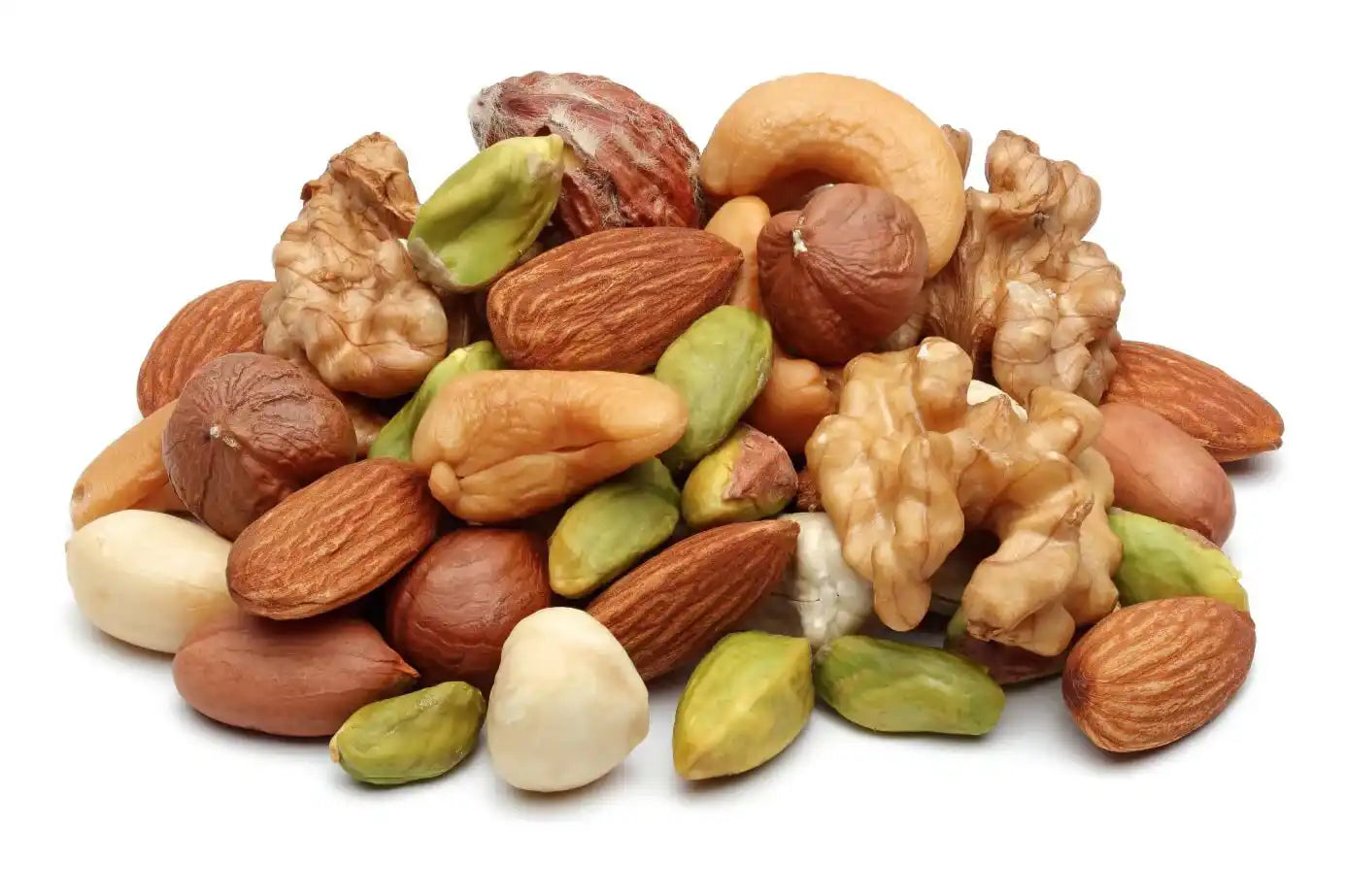
Explore Our Nuts Collection
Discover our premium selection of nuts, from classic favourites to delicious roasted and flavoured varieties. Perfect for everyday snacking, sharing, or adding a satisfying crunch to your favourite recipes.
Shop All NutsHow to Buy Pumpkin Seeds Near Me in the UK?
-
Buying well starts with knowing what matters beyond just flavour. For regular eating, look for seeds that appear fresh and dry, without visible mould, unusual discoloration, or signs of moisture inside the pack.
-
Country of origin and processing information are worth checking when available. They give you a clearer idea of how the seeds were handled before reaching the pack.
-
Allergen statements matter too. Pumpkin seeds are not tree nuts, but some products may be packed in facilities that also handle nuts, sesame or other allergens.
-
If you use seeds several times a week, shelled kernels are usually the most practical form because the edible portion is ready to measure and add to meals.
-
At Nutsoasis, focus on the form, batch information and allergen guidance that best match how often and how you plan to eat the seeds.
Conclusion
Pumpkin seeds are easy to overlook, but they bring a useful mix of plant protein, unsaturated fats, fibre and important minerals into everyday eating. The best choice depends on how you plan to use them: raw for mixing into meals, roasted for extra crunch, or unsalted when you want more control over sodium. If you are searching for pumpkin seeds near me, NutsOasis gives you a simple way to compare options and choose a pack that fits your routine without overcomplicating the decision.
FAQs
Are pumpkin seeds suitable for pregnancy?
Yes, pumpkin seeds can be a nutritious addition to a balanced pregnancy diet, providing protein, magnesium, iron, zinc and unsaturated fats. Pumpkin seed for pregnancy should be considered a food source rather than a replacement for prenatal supplements or personalised medical advice.
Can you be allergic to pumpkin seeds?
Yes, although pumpkin seed allergy is less commonly discussed than nut allergy. Reactions can occur after eating the seeds, and someone with a suspected reaction should avoid testing their tolerance by eating them again and seek appropriate medical assessment.
Do pumpkin seeds contain all essential amino acids?
Pumpkin seeds contain all nine essential amino acids, but the amounts of some essential amino acids may be relatively limited compared with higher-quality protein sources. Therefore, pumpkin seeds can contribute to protein intake but are not necessarily equivalent to high-quality animal protein in terms of amino-acid profile.
Can children eat pumpkin seeds?
Yes, but age and texture matter. Whole pumpkin seeds can be difficult for younger children to chew safely, so finely ground or crushed seeds may be easier to mix into foods such as porridge or yoghurt.