How Long Do Walnuts Last? Shelf Life and Storage Tips
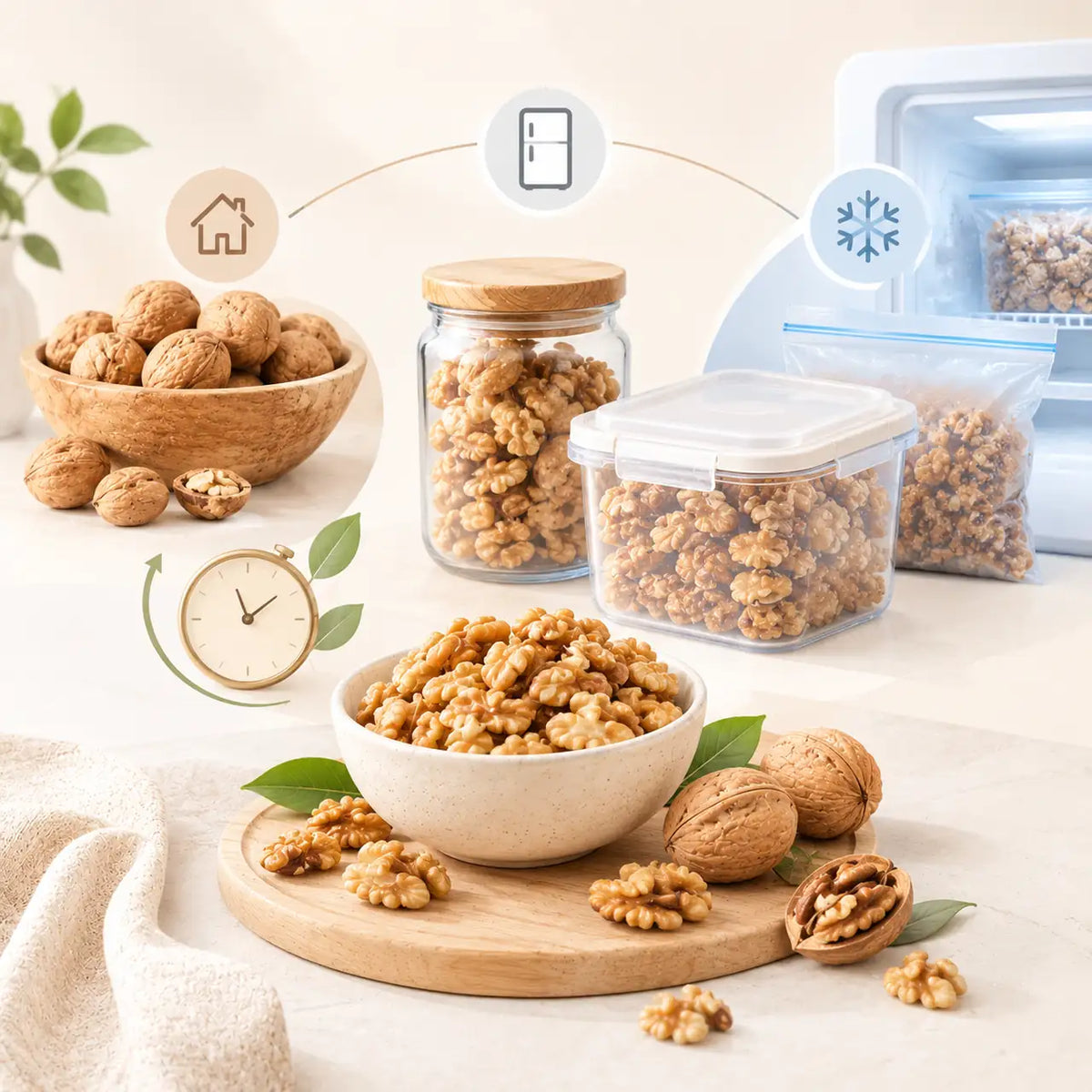
Walnuts don't keep the way other nuts do. Buy a bag, forget it at the back of the cupboard for a few months, and there's a good chance you'll open it to a sharp, paint-like smell that wasn't there before. So how long do walnuts last, and what actually determines whether yours are still worth eating? Shelled walnuts typically keep for a few weeks up to about three months in a cool cupboard, three to six months in the fridge, and up to a year in the freezer. Walnuts in the shell last longer in each case. Here's the detail.
Why Walnuts Go Off Faster Than Most Other Nuts?
- Walnuts have one of the highest fat contents of any nut, and most of that fat is polyunsaturated. That's the same fat that makes them good for you and the reason they go rancid quicker than, say, almonds or cashews.
- Polyunsaturated fats oxidise when they're exposed to air, light and warmth. Once oxidation starts, it doesn't stop on its own. It's why walnuts kept somewhere cool and dark hold up well, while the same walnuts left out in a warm kitchen can turn bitter within weeks.
- This is also why the question "do walnuts go bad" comes up so often for this particular nut. Almonds, cashews, and pistachios are generally more forgiving in a cupboard. Walnuts are less so.
Explore Our Walnuts Collection
Discover the rich, earthy flavour and satisfying crunch of our premium walnuts. Perfect for snacking, baking, or adding a delicious and nutritious touch to your favourite recipes.
Shop WalnutsHow Long Do Walnuts Last?
Shelf life varies depending on temperature, humidity, packaging, freshness at purchase, and whether the walnuts are shelled. Published guidance also varies, so the ranges below lean towards the cautious end.
| Where you store them | In-shell walnuts | Shelled walnuts |
|---|---|---|
| Cool, dry cupboard (about 20°C) | Around 3–6 months | A few weeks up to 3 months |
| Fridge (about 4°C) | 6–12 months | 3–6 months typically; some sources say up to a year |
| Freezer (−18°C) | 12 months or more | Up to 12 months for best quality; some sources say 18–24 months |
- Freezer times refer to best quality. Walnuts kept constantly frozen stay safe to eat beyond that, but the flavour and texture slowly decline.
- The shell shields the kernel from air, light, and moisture, so in-shell walnuts keep noticeably longer than shelled ones. Once the shell is off, the kernel is exposed to oxygen and starts to lose quality sooner. That's why shelled walnuts belong in the fridge or freezer if you won't finish them quickly.
- If you buy in-shell walnuts, wait to crack them until you're ready to use them.
Walnuts vs Pecans Nutrition Omega 3 Fibre and Taste
How Long Do Walnuts Last Once Opened?
Once a pack is open, transfer the walnuts to an airtight container and keep them in the fridge. Michigan State University Extension suggests refrigerated walnuts stay fresh for up to about three months, while freezing keeps them for up to a year. If you won't use an opened pack within a few weeks, freeze it in portions.

Discover Our Raw Walnuts
Enjoy the naturally rich flavour and satisfying crunch of our premium raw walnuts. Fresh and versatile, they’re ideal for snacking, baking, or adding to your favourite recipes.
Shop Raw WalnutsHow to Store Walnuts Properly?
- The best answer to the question of "how long do walnuts last" comes down to three things: keep them cool, keep them dark, keep them sealed. Doing all three slows oxidation, so they stay fresh for far longer than in an open bag left on a worktop.
-
An airtight container is non-negotiable. Glass jars with a tight lid work well, as do resealable freezer bags with the air pressed out before sealing. Skip anything that lets air circulate, including the paper or thin plastic some walnuts are sold in.
-
Vacuum-sealing is a good option for long-term storage. In a laboratory study of walnut kernels, vacuum or nitrogen packaging slowed oxidation compared with ordinary packaging.
-
Walnuts absorb smells, so keep them away from strong-smelling foods such as onions, fish or cabbage.
Best Walnuts Online Raw Fresh and Right for UK Kitchens
How Long Do Walnuts Last in the Fridge?
Sealed shelled walnuts typically keep well for three to six months in the fridge, and some sources say up to a year. The fridge slows oxidation without the texture changes some people notice after freezing.
How to Freeze Walnuts?
- For long-term storage, the freezer is the best option. Most recipes don't need thawed walnuts; you can bake or chop them straight from frozen.
-
To freeze walnuts properly, spread them on a tray first so they freeze individually, then transfer them to a labelled, airtight bag or container. This stops them clumping into one solid block and lets you take out only what you need.
-
Freezing in small portions also avoids repeated thawing and refreezing, which can affect texture.
-
Keep walnuts in a freezer at −18°C or colder, and let them come to room temperature in the sealed container before opening if you plan to eat them as they are.

Discover Our Chocolate Walnuts
Enjoy the delicious combination of crunchy walnuts and rich chocolate flavour. Our Chocolate Walnuts make a satisfying treat for snacking, sharing, or enjoying whenever you fancy something indulgent.
Shop Chocolate WalnutsHow to Tell If Walnuts Have Gone Bad?
- Your nose is the most reliable tool here. Fresh walnuts smell mild and nutty. Rancid ones smell sharp, waxy, occasionally like paint thinner or old paint. If you catch that smell before you even taste one, trust it.
-
Taste comes next. Rancid walnuts taste bitter or metallic, sometimes with a lingering unpleasant aftertaste that fresh walnuts simply don't have. A slightly stale walnut might just taste flat and dull rather than actively bad.
-
Look at the walnuts themselves too. Rubbery or shrivelled kernels, dark spots, and a soft, oily sheen are signs of age. Mould means the whole batch goes in the bin.
-
Also check for tiny holes, fine webbing, or small larvae, which point to pantry pests. Insects are more of a problem in warm storage, which is another reason to keep walnuts cold. Discard the whole batch if you see any of these.
Walnut What Is It Good For Discover Its Top Benefits
Is It Safe to Eat Rancid or Out-of-Date Walnuts?
- Rancid walnuts aren't necessarily unsafe to eat in a single bite, but they taste unpleasant and have lost much of their quality, so there's no reason to persevere. If a walnut tastes bitter or smells off, spit it out and discard the rest of the batch.
- The date on the pack is a guide too. In the UK, "best before" is about quality, not safety, and it's the date you'll usually find on nuts. "Use by" dates are for higher-risk foods where safety matters, so they don't normally apply to walnuts. The Food Standards Agency also notes that a best before date is only accurate if the food is stored as the packaging instructs.
walnuts purchase online UK The Complete Buying Guide
Can You Revive Stale Walnuts?
- Stale is different from rancid, and it's worth telling the two apart. Stale walnuts have lost some crunch and flavour but haven't developed that bitter, oily edge. These can often be brought back.
- A quick toast in a dry pan or a low oven at 160°C (140°C fan, gas mark 3) for five to eight minutes drives off some moisture and wakes up the natural oils, restoring a good amount of crunch and flavour. Keep a close eye on them; walnuts go from toasted to burnt quickly once the oils start heating.
- Rancid walnuts, on the other hand, are a lost cause. Toasting won't reverse oxidation, and heat can make the bitter flavour more obvious rather than less. If they smell off before you toast them, they'll smell and taste off afterwards too.
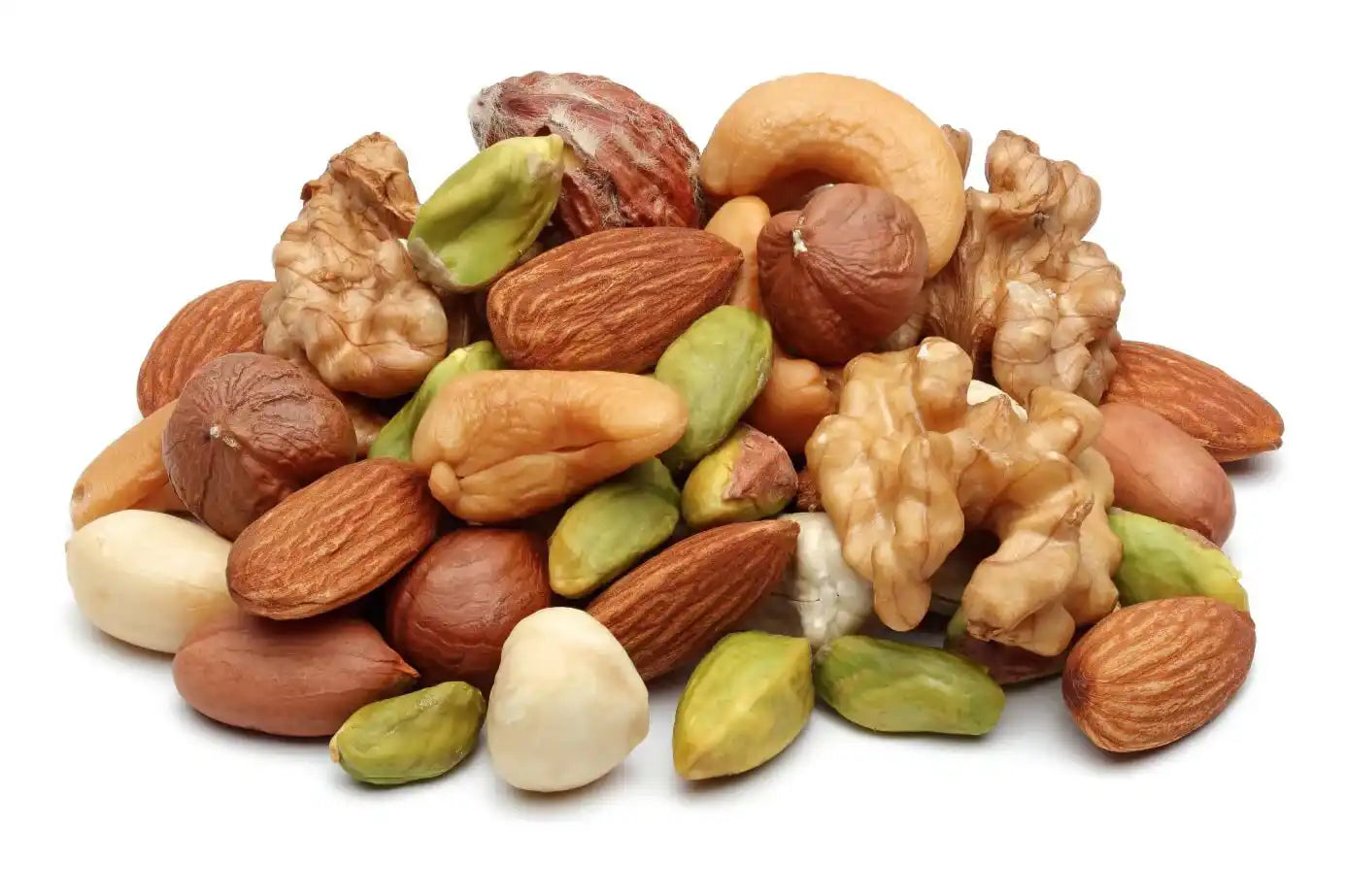
Explore Our Nuts Collection
Discover our selection of premium nuts, from classic favourites to delicious mixed varieties. Carefully selected for their quality, flavour, and satisfying crunch, they’re perfect for everyday snacking, sharing, or adding to your favourite recipes.
Shop NutsHow Long Do Walnuts Last Compared to Other Nuts?
Walnuts sit toward the shorter end of the shelf-life scale. Fat composition is a big part of the reason. Suppliers' timings for other nuts vary widely, so this table compares them in general terms rather than giving exact dates.
| Nut | Main fat type | Cupboard storage | Longer storage |
|---|---|---|---|
| Walnuts | Mostly polyunsaturated | Shortest of the group | Fridge or freezer |
| Pecans | Rich in unsaturated fats | Fairly short; cooler storage helps | Fridge or freezer |
| Almonds | Mostly monounsaturated, with vitamin E | Keep for several months when cool, dry, and sealed | Fridge or freezer for a year or more |
| Cashews and pistachios | Mostly monounsaturated | Generally keep longer than walnuts | Fridge or freezer |
The Role of Fat Composition:
- Almonds contain a relatively high proportion of monounsaturated fat, particularly oleic acid, which is less prone to oxidation than polyunsaturated fat. They also contain vitamin E, which can help protect their oils.
- Walnuts are made up mostly of polyunsaturated fat, including omega-3 alpha-linolenic acid, which is more susceptible to oxidation and can contribute to rancid flavours when storage conditions are unfavourable.
- However, fat composition is only part of the picture. Temperature, oxygen, moisture, light and packaging all affect how long nuts keep. For longer storage, keeping nuts sealed and refrigerated or frozen helps slow oxidation and preserve freshness.
Type of Nuts in Mixed Nuts Explained and Their Benefits
Where to Buy the Freshest Walnuts in the UK?
- Freshness starts before the walnuts even reach your cupboard. A bag that has sat on a shelf for months is already partway through its shelf life before you get it home.
-
Look for suppliers who show a best before date, list the pack weight and allergens, and package nuts in sealed bags.
-
Buying in smaller quantities more often, rather than one large bag "to save a trip", also helps keep what's in your cupboard closer to fresh.
-
Nutsoasis stocks walnuts for delivery across the UK. When yours arrive, check the seal and the best before date, then move the pack to the fridge or freezer if you won't use it soon.
Conclusion
Getting the most out of your walnuts really comes down to two habits: buying from a source that shows clear dates, and storing what you don't use straight away in the fridge or freezer rather than leaving it in a warm cupboard. Get those two things right, and you'll rarely have to ask how long do walnuts last, because you'll be finishing the bag well before it becomes an issue.
FAQs
Can I eat walnuts past their best-before date?
A best-before date is a guide to peak quality, not a safety cut-off. Walnuts past this date are usually still fine to eat if they've been stored well and smell and taste normal. Use your senses as well as the date on the packet.
Do walnuts need to be refrigerated straight away?
An unopened pack can stay in a cool, dark cupboard until its best before date unless the label says otherwise. Once opened, and especially for shelled walnuts in warm weather, the fridge slows oxidation and is worth the extra minute it takes.
Can you freeze walnuts?
Yes. Spread them on a tray, then transfer them to a labelled, airtight bag or container. Frozen walnuts keep their best quality for about a year, and can be used straight from the freezer in most recipes.
Can you refreeze walnuts?
As long as they've been kept cold, refreezing isn't a safety problem, but repeated thawing can affect texture. Freeze walnuts in small portions so you only take out what you need.
Why do my walnuts taste bitter even though the bag was recently bought?
This usually points to poor storage before you bought them, such as sitting somewhere warm or under bright shop lighting for too long. It can also happen if the walnuts were not stored with enough care during processing.