Raw vs Roasted Pecans Which Suits Baking or Snacking
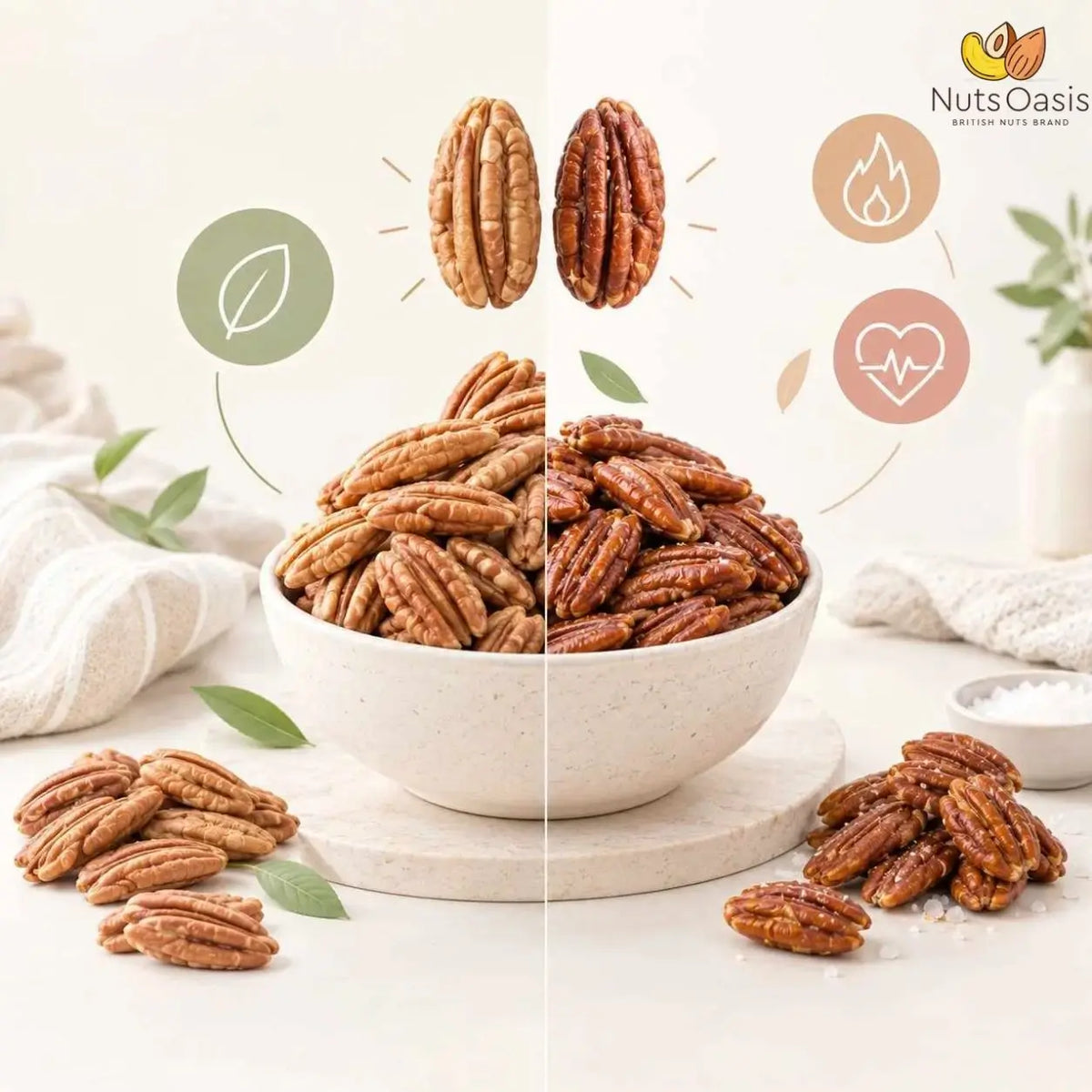
Raw vs roasted pecans comes down to use: raw suits baking, roasted suits snacking, and both give 207 to 213 kcal per 30g. Raw pecans taste mild and buttery with a soft bite, whereas roasting adds crunch and a deeper nutty flavour. Salt and sugar coatings change the nutrition more than roasting does. This guide covers nutrition, heart health, oven toasting, storage, allergy labelling and where to buy in the UK. First, what actually separates the two?
What Is the Difference Between Raw and Roasted Pecans?
- The difference is heat: raw pecans are unroasted, whereas roasted pecans are heated in an oven or oil to deepen flavour. Everything else follows from that step, including texture, shelf life, and whether salt or sugar gets added. The three sections below explain each label and then compare them side by side.
What Are Raw Pecans?
- Raw pecans are shelled kernels that have not been roasted, so they stay pale brown with a soft crunch and mild taste. A plain bag of raw pecan nuts contains only pecans, with no added salt, oil or sugar.
- Bakers like them because the neutral flavour lets other ingredients lead, and you can roast them at home later if you want more depth.
What Are Roasted Pecans?
- Roasted pecans are kernels cooked a second time in dry heat or in oil, which drives off moisture and deepens the flavour. Dry-roasted kernels are heated in an oven or drum with no added fat.
- Oil-roasted pecans are cooked in vegetable oil, which adds a little more fat and a glossier finish, although the difference in calories is small.
- Roasted pecan nuts sold in the UK come plain, salted or glazed. Salted pecans add sodium, and candied pecans add a sugar or honey shell, so the ingredients list matters.
Benefits of the Best Roasted Salted Pecans
Raw vs Roasted Pecans at a Glance:
Raw vs roasted pecans differ mainly in texture, flavour and shelf life, whereas calories, protein and fibre stay almost identical.
| Feature | Raw | Roasted |
|---|---|---|
| Texture | Soft, slightly chewy | Crisp, firm |
| Flavour | Mild, buttery | Deeper, nutty |
| Added salt or sugar | None in plain packs | Common in salted and glazed packs |
| Best for | Pies, brownies, baking | Snacking, salads, porridge |
| Keeping quality | Longer when plain | Shorter once opened |
The numbers are what most shoppers want next, so how do the two compare per 30g?
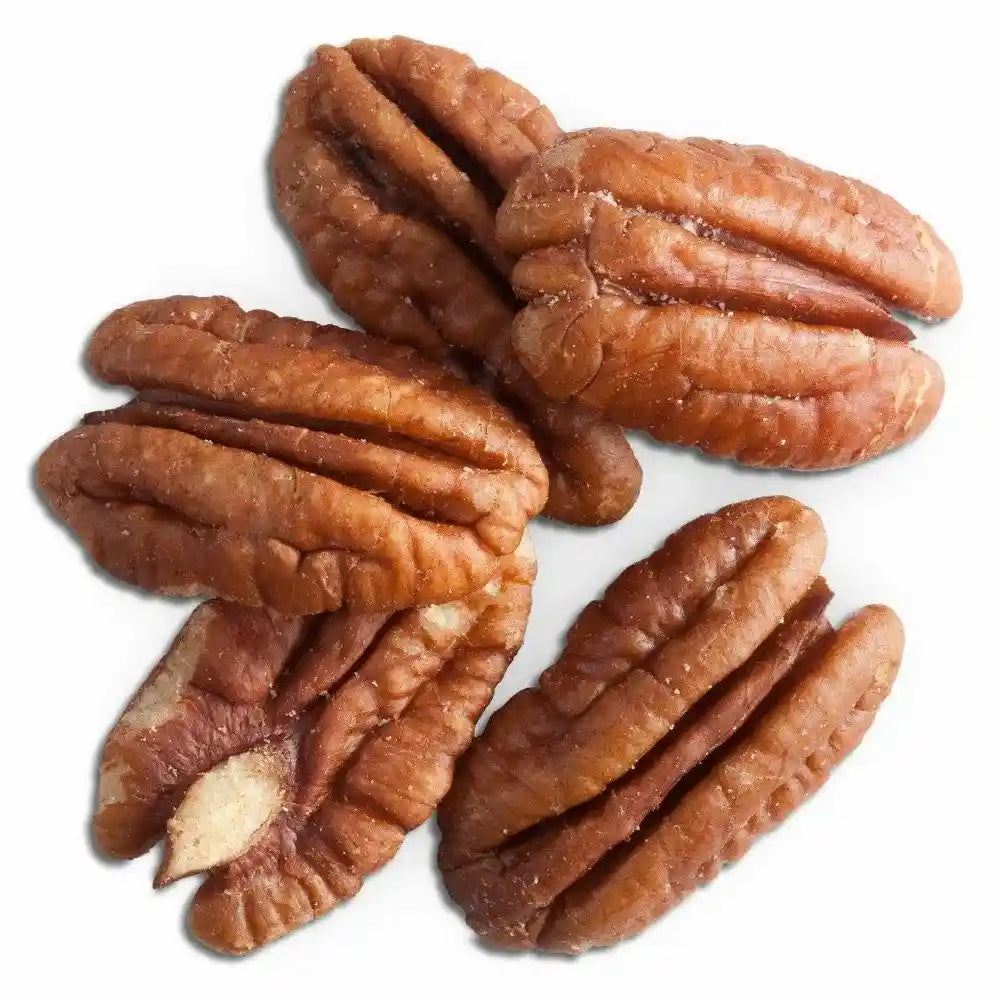
Explore Our Premium Pecan Nuts Collection
Discover the rich, buttery flavour and delicate crunch of our premium pecan nuts. Naturally packed with healthy fats, fibre, and essential nutrients, pecans are a delicious choice for snacking, baking, or adding to recipes.
Shop Pecan NutsRaw vs Roasted Pecans (Per 30g Serving):
Per 30g, raw pecans give 207 kcal and dry-roasted pecans 213 kcal, a gap of 6 kcal. The USDA figures below are scaled from 100g, and roasting removes a little moisture, which concentrates the fat. The gap between raw vs roasted pecans is small for that reason.
| Per 30g | Raw | Dry-roasted, unsalted |
|---|---|---|
| Calories | 207 kcal | 213 kcal |
| Protein | 2.8g | 2.9g |
| Fat | 21.6g | 22.3g |
| of which saturates | 1.9g | 1.9g |
| Carbohydrate | 4.2g | 4.1g |
| Fibre | 2.9g | 2.8g |
| Thiamin (vitamin B1) | 0.20mg | 0.14mg |
| Manganese | 1.4mg | 1.2mg |
| Magnesium | 36mg | 40mg |
Salt is the bigger difference. NutsOasis lists 1.0g of salt per 100g for its salted roasted pecan option, which is 0.3g in a 30g serving, against the NHS limit of 6g a day for adults. Thiamin is the clearest loss from roasting because it is sensitive to heat.
Does that nutrient gap change anything for taste and cooking?
Walnuts vs Pecans Nutrition Omega 3 Fibre and Taste
Taste and Texture Differences: Raw vs Roasted Pecans:
- Raw pecans taste mild, buttery, and slightly sweet with a soft bite, whereas roasted ones taste deeper and nuttier with a firm crunch. Roasting darkens the kernel and drives off moisture, which creates the crisp texture and toasted aroma.
- Salted pecans add a savoury edge, and candied pecans add a sweet, caramelised shell. That texture gap is the main reason the raw vs roasted pecans decision depends on the recipe. Raw halves stay chewy inside a pie filling, whereas roasted halves stay crisp on top of a salad or dessert.
Which version makes more sense for your heart and your waistline?

Discover Our Premium Raw Pecan Nuts
Enjoy the naturally rich, buttery flavour of our premium raw pecan nuts. Packed with healthy unsaturated fats, fibre, and essential minerals, these delicious pecans are perfect for wholesome snacking and home baking.
Shop Raw Pecan NutsRaw or Roasted Pecans for Heart Health and Weight Management:
- Both raw and roasted pecans can support heart health, because the benefit comes from unsaturated fat and fibre rather than from roasting.
- Salt and sugar coatings are the variables that matter, so plain pecans of either type suit regular eating.
Pecans and Heart Health: What Do the Trials Show?
- Pecans improved blood cholesterol in two randomised trials of adults at higher cardiovascular risk. In a 2021 trial of 56 adults, eating 68g of pecans a day for 8 weeks improved LDL cholesterol and triglycerides. A 2025 trial using 57g of raw, unsalted pecans a day for 12 weeks also improved total, LDL, and non-HDL cholesterol and triglycerides.
- Trials of this size show a direction, not a guarantee. Pecans pay off as a swap for less healthy snacks rather than as an extra on top.
Unlocking the Top 5 Benefits of Raw Pecans Today
Pecans and Weight Management:
- Pecans are energy-dense, so portion size decides whether they help or hinder weight management. In the 2025 trial, adults who added 57g of pecans a day gained 0.85 kg on average over 12 weeks.
- A 30g portion gives 207 to 213 kcal, so weigh it once and pour the rest into a small pot. Choose plain raw or dry-roasted pecans over glazed ones, which add sugar.
That leaves the practical question: which type belongs in your next pie, salad or bowl of porridge?
How to Use Raw or Roasted Pecans in UK Kitchens:
Use raw pecans where they will bake or simmer, and roasted ones where they stay crunchy as a topping. The three uses below cover the most common UK recipes.
Pecans for Pecan Pie: Raw or Roasted?
- Raw pecans are the usual choice for pecan pie, because the oven toasts them as the filling sets. Choosing pecans for pecan pie is mostly about shape: halves suit the top layer, whereas pieces mix evenly through the filling.
- If you want a deeper flavour, toast the halves for 5 to 8 minutes before they go on the pie. Whole halves also keep their shape better when you slice them.
Best Pecans to Buy Online Complete UK Buying Guide
Pecans in Salads and Savoury Dishes:
- Roasted pecans work well in salads, because their crunch holds against dressing and soft leaves. Chop them roughly for roasted vegetables, cheese boards or a sticky toffee pudding, where a salted batch adds a savoury contrast to the sweetness.
- Toast a handful in a dry pan for 3 to 4 minutes if the pecans have softened in the bag. A salted batch suits bitter-leaf salads, whereas unsalted ones suit sweeter fruit salads.
Pecans in Porridge and Breakfast Bowls:
- Chopped pecans add crunch and fibre to porridge, and a 30g handful provides 2.9g of fibre. Stir them in raw for a mild flavour, or toast them first for a nuttier topping.
- Add them at the end so the hot cereal does not soften them, and keep a small tub of toasted pieces ready for busy mornings.
Toasting at home is cheap and quick, so how do you toast pecans without burning them?

Discover Our Roasted Salted Pecans
Indulge in the rich, buttery flavour and satisfying crunch of our Roasted Salted Pecans. Perfectly roasted and seasoned with salt, these delicious pecan nuts make an irresistible savoury snack, ideal for sharing or enjoying a crunchy treat.
Shop Roasted Salted PecansHow to Roast Raw Pecans at Home?
Roasting raw pecans at home takes 4 steps and about 15 minutes in the oven. This is how to toast pecans in a UK oven with a gentle heat that protects the fats, and the same method works for pieces as well as halves.
-
Heat the oven to 140°C (120°C fan).
-
Spread the pecans in a single layer on a baking tray lined with baking paper.
-
Roast for 15 minutes, stirring once, and check from 10 minutes.
-
Tip the pecans onto a cool plate as soon as they smell nutty.
A low-to-medium temperature of about 140°C for roughly 15 minutes is the method Healthline recommends for roasting nuts yourself, because higher heat and longer times raise oxidation. Pecans burn quickly, so stay near the oven.
Once the pecans are roasted, which type should you actually buy?
Why Christmas Pecans Nuts Are a Must Have for Your Festive Season
Raw vs Roasted Pecans: Which One Should You Choose?
Choose raw pecans for baking and cooking, and roasted ones for snacking and toppings; unsalted versions suit daily eating. Use the table to match the pecan to the job.
| If you want | Choose | Why |
|---|---|---|
| Pecan pie, brownies, banana bread | Raw | Mild flavour, and the oven does the roasting |
| Everyday snacking | Roasted, unsalted | Crunch with no added sodium |
| Salad or porridge topping | Roasted | Stays crisp |
| Lowest sodium | Raw or unsalted roasted | No added salt |
| A sweet dessert topping | Glazed or candied | Caramelised shell |
Salt and sugar matter more than the roast, so read the ingredients list before you decide. On raw vs roasted pecans, the plain version of either is the safest default for daily eating.
Healthiest Nut for You Cashews Hazelnuts and Pecans
Pecan Nut Allergy and UK Labelling:
- Pecan nut allergy is a tree nut allergy, which affects 2% of children and 0.5% of adults in the UK. UK food law lists tree nuts among the 14 allergens that must be emphasised in bold on the ingredients list. NHS hospital guidance for walnut and pecan allergy tells patients to avoid foods containing either nut.
- Pecan pie, pecan praline and sticky toffee pudding are common hidden sources. If you suspect an allergy, see your GP for a referral rather than testing yourself with a snack. Once your pecans are safe to eat, how long will they keep?

Discover Our Honey Roasted Pecans
Indulge in the irresistible combination of rich, buttery pecans and deliciously sweet honey flavour. Our Honey Roasted Pecans offer a satisfying crunch and a delightful balance of sweetness and nuttiness, making them perfect for snacking.
Shop Honey Roasted PecansShelf Life, Proper Storage, and How to Spot Rancid Pecans:
- Shelled pecans keep for about 9 months in the fridge and up to 2 years in the freezer. Those times come from the National Pecan Shellers Association, which also advises airtight jars for the fridge and sealed bags for the freezer. Pecans can be frozen, thawed and refrozen without losing flavour.
- Pecans are rich in unsaturated fat, so they turn rancid faster than many nuts when left warm. Rancid pecans smell like paint or old oil, taste bitter or flat, and look oily or limp. Throw them away rather than hoping the taste will pass. Keep an unopened bag somewhere cool and dark, and move opened packs to the fridge.
So where do you find fresh pecans in the UK?
Crafting Perfect Glazed Pecans for Salad
Where to Find the Best Pecans for UK Shoppers?
- The pecans worth buying for UK shoppers are fresh, clearly labelled, and sold with the roast type and allergen details on the pack. Look for a plain ingredients list, a clear date mark and a resealable bag. NutsOasis stocks both sides of the raw vs roasted pecans choice, plus honey roasted pecan for dessert toppings.
- NutsOasis prices a 100g pack of pecans from £2.90 to £3.70, depending on whether you choose raw pecans from NutsOasis or the salted roasted version. Orders dispatch within 1 working day, and parcels up to 2kg travel by Royal Mail Tracked 48, which aims for 2 to 3 working days.
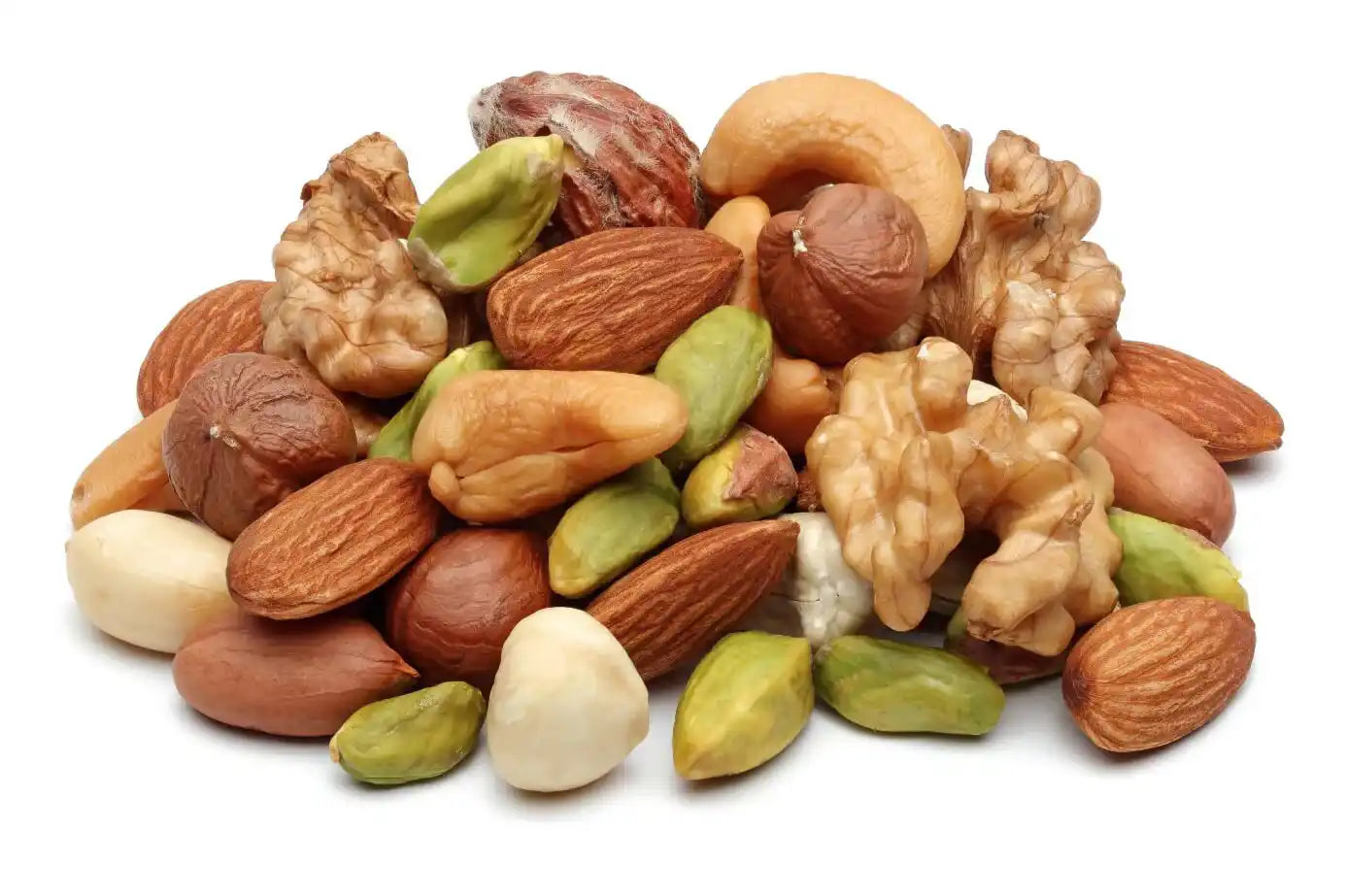
Explore Our Premium Nuts Collection
Discover our delicious selection of premium nuts, from crunchy almonds and creamy cashews to rich walnuts and mixed nuts. Naturally packed with protein, healthy fats, and essential nutrients, our nuts are perfect for everyday occasions.
Shop Premium NutsConclusion
The conclusion on raw vs roasted pecans is a choice about use, not quality. Pick raw pecans for pies, brownies, and anything that bakes; pick roasted pecans for snacking, salads, and porridge, and choose unsalted when you eat them daily. Weigh out 28g to 30g, keep the bag sealed and cold, and bin any pecans that smell of paint or old oil.
FAQs
How many pecans should I eat a day?
A daily portion is about 28g, which is roughly 19 pecan halves. That is the standard handful Nutsoasis uses in its pecan FAQ. The heart trials used 57g to 68g a day, which is larger than a typical snack, so weigh your portion once and keep to it. Spread across the day, that is a small handful at breakfast or a few halves with fruit. If you choose salted pecan nuts, count the salt towards your 6g daily limit.
Are pecans keto-friendly?
Yes, pecans suit keto in small portions, with about 1.3g of net carbohydrate in a 30g serving. Net carbohydrate is total carbohydrate minus fibre, which is 13.9g minus 9.6g per 100g in raw pecans, according to USDA data. Dry-roasted unsalted pecans work out almost the same, but glazed ones add sugar and carbohydrate, so check the label before you buy.
Are honey roasted pecans healthy?
Honey roasted pecans keep the nutrients of plain pecans but add free sugars, so they suit an occasional treat better than daily snacking. Candied pecans go further, with a sugar shell that lifts calories and sweetness. For everyday eating, plain raw or dry-roasted pecans keep sugar to the 1.2g found naturally in a 30g serving, as the Nutsoasis guidance on glazed pecans explains.
How many calories are in a pecan half?
A pecan half provides about 10 kcal, so a 28g handful of 19 halves comes to around 193 kcal. That is for raw pecans; the same handful of dry-roasted pecans gives 199 kcal, using USDA values of 691 and 710 kcal per 100g. Salted and glazed packs run slightly higher, and a pot of 10 halves caps a snack at roughly 100 kcal.