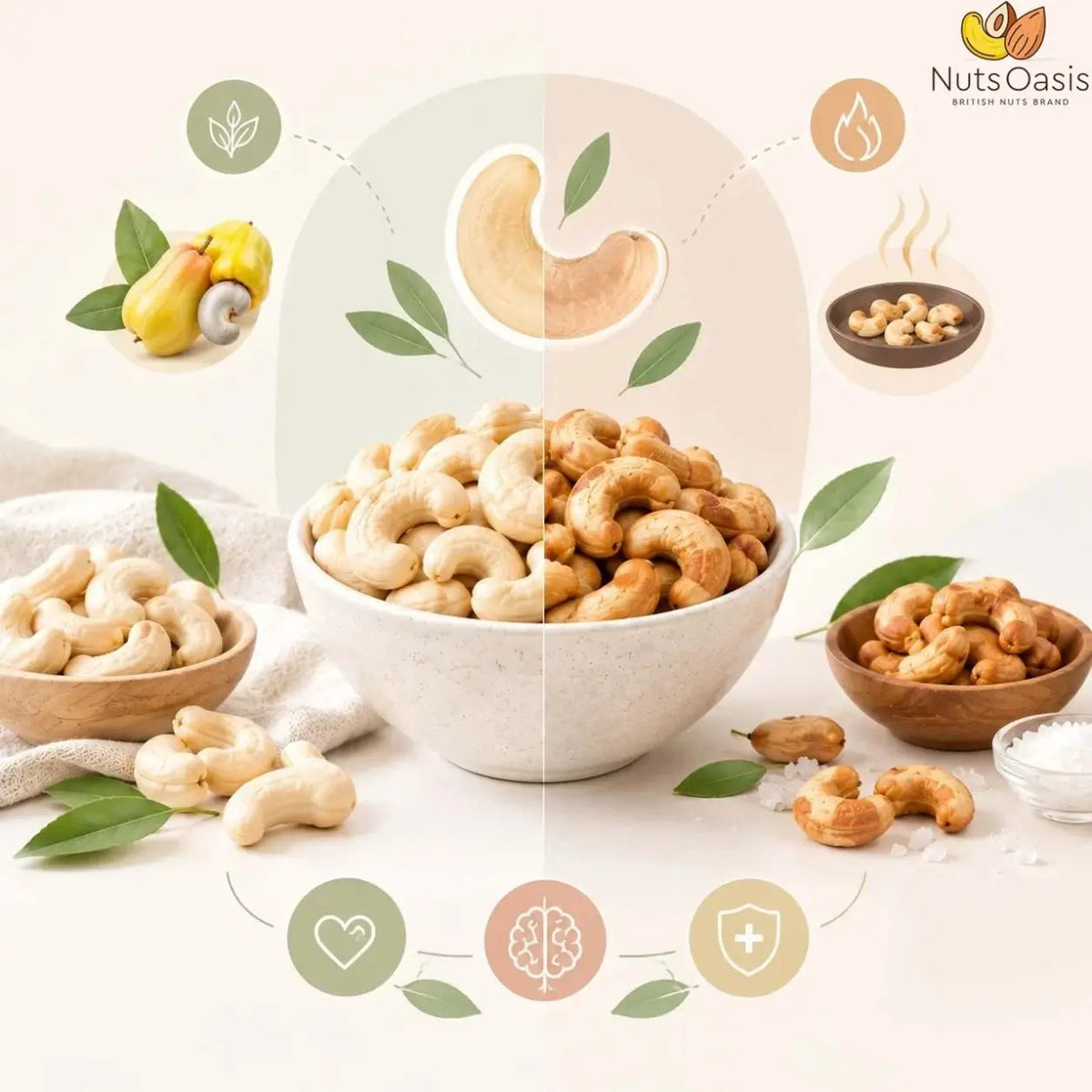
Raw vs Roasted Cashews nutrition taste and what to buy
Raw vs roasted cashews sounds like a simple choice until you read the labels. One bag says raw, yet the nuts have been steamed. Another says roasted, which might mean oil, salt, and extra calories. This guide explains what raw actually means, how each type is made, how they compare per 30g, and which one suits your cooking, your health goals, and your budget in the UK.
Are Cashews Good for You? A guide to Portions and Benefits
Are "Raw" Cashews Actually Raw?
- Not quite. The cashews sold as raw in the UK have been heat-treated, usually steamed, before they reach the shelf. They haven't been browned or flavoured, and that's all "raw" means on a pack. You'll also see "natural" or "unroasted" on UK labels. In practice, they describe the same thing: steamed, shelled, and left pale.
- The reason is the shell. Each cashew grows inside a shell that holds a caustic oil containing urushiol, the same irritant found in poison ivy. Cashews belong to the same plant family as mango and pistachio, and the oil can blister skin. That's why you never see them sold in the shell.
- Processors steam or roast the nuts in their shells, which loosens the casing and neutralises the oil. The kernels are then cracked, dried and peeled. What reaches you is safe to eat, pale ivory and mild.
- One distinction matters here. Shell oil causes contact reactions on the skin. A cashew nut allergy is different: an immune response to proteins in the kernel itself, and steaming doesn't remove those.
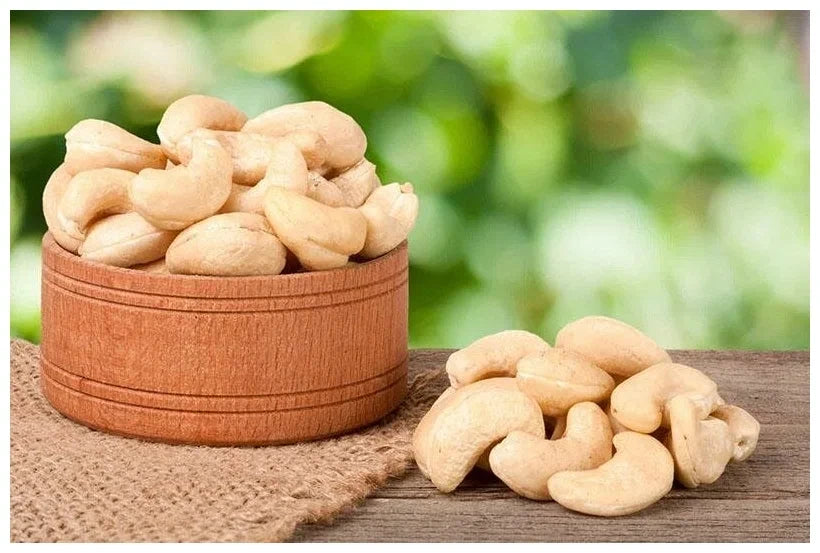
Explore Our Cashew Nuts Collection
Discover our premium cashew nuts, loved for their naturally creamy texture, delicate flavour, and satisfying crunch. Perfect for everyday snacking, sharing with friends and family, or adding a delicious touch to your favourite recipes.
Shop Cashew NutsWhat Are Roasted Cashews?
Roasted cashews are kernels cooked a second time, after steaming, to deepen the flavour and add crunch how they're cooked changes the nut more than people expect.
-
Dry roasted: tumbled in hot air with no added oil. They turn golden and crisp, taste nutty rather than greasy, and keep the nut's natural fat profile.
-
Oil roasted: fried briefly in vegetable oil. The result is glossier and richer, with a little more fat. Check which oil was used, because palm oil adds saturated fat.
| Point | Dry Roasted | Oil Roasted |
|---|---|---|
| Method | Hot air, no added oil | Brief frying in vegetable oil |
| Finish | Matte, golden, crisp | Glossy, richer, slightly greasy |
| Fat | Close to the raw nut | A little higher |
| Label check | Salt, flavourings | Type of oil, salt |
Flavoured versions complicate things. Honey-roasted, chilli and salted varieties add sugar, salt or both. For a fair comparison with raw, start with plain, unsalted, dry roasted cashew nuts.
Discover the Amazing cashew nuts and almonds benefits
Nutrition Raw vs Roasted Cashews:
Raw vs roasted cashews are closer nutritionally than the labels suggest. A 30g portion, about 15 to 20 kernels, gives you almost the same calories, protein, and fat either way. The figures below come from USDA data, scaled down from 100g.
| Per 30g | Raw | Dry Roasted, Unsalted |
|---|---|---|
| Calories | 166 kcal | 172 kcal |
| Protein | 5.5g | 4.6g |
| Fat | 13.2g | 13.9g |
| of which saturates | 2.3g | 2.7g |
| Carbohydrate | 9.1g | 9.8g |
| Fibre | 1.0g | 0.9g |
| Magnesium | 88mg | 78mg |
| Zinc | 1.7mg | 1.7mg |
| Copper | 0.7mg | 0.7mg |
| Selenium | 6µg | 4µg |
| Thiamin (vitamin B1) | 0.13mg | 0.06mg |
| Vitamin K | 10µg | 10µg |
Thiamin is the clearest casualty of heat. Salt is the other big difference. Salted roasted kernels carry about 190mg of sodium per 30g, or 0.5g of salt, which is around 8% of the 6g daily limit for adults.

Discover Our Premium Raw Cashew Nuts
Enjoy the naturally creamy texture and delicate, buttery flavour of our premium raw cashew nuts. They're perfect for everyday snacking, baking, cooking, or creating delicious homemade cashew butter.
Shop Raw Cashew NutsHealth Benefits of Raw vs Roasted Cashews:
So, are roasted cashews healthy? Yes. Both types supply unsaturated fat, plant protein, magnesium, copper, and zinc. What changes is what gets added during roasting, not the nut itself.
Here is how the evidence on raw vs roasted cashews looks in the three areas people ask about most: your heart, your waistline and your blood sugar.
Heart Health & Blood Pressure:
- The evidence on cashews and cholesterol is mixed. A pooled analysis of five randomised trials found no significant change in LDL cholesterol, though systolic blood pressure fell by about 4 mmHg. A 12-week trial in 300 adults with type 2 diabetes, eating 30g a day, saw HDL cholesterol rise and systolic pressure drop. A crossover trial giving 42g daily found no change in blood lipids at all.
- Cashews do contain some saturated fat, about 2.3 to 2.7g per 30g, but much of it is stearic acid, which has a neutral effect on blood lipids. They also bring magnesium and potassium, two minerals linked to healthy blood pressure, which may help explain the small drop seen in the trials.
- Swapping cashews for crisps or biscuits is a sound trade. Expecting them to treat high cholesterol is not. Between the two types, salt matters more for your heart than roasting does, so go unsalted whichever you pick.
Unleash the Cashew Food Value: Fuel Your Athletic Edge
Weight Management & Portion Control:
- How many cashews a day? Aim for 30g, which is 15 to 20 kernels. And how many calories in a handful of cashews? A level 30g handful comes to 165 to 175 kcal whether raw or dry roasted, while a generous 45g scoop is closer to 250.
- The raw or roasted choice barely moves that number. Portion size does. The 12-week trial above found no weight gain at 30g a day, so nuts can sit comfortably in a balanced diet when portions stay put. Weigh one portion, then divide the rest into small pots.
- Pairing a handful with fruit or yoghurt also stretches the snack, so you're less tempted to go back for more. Eating from the bag is where 170 kcal quietly becomes 500. Oil-roasted and honey-roasted types run higher, so check the per-100g figure on the label.
Blood Sugar & Digestibility:
- Both types are gentle on blood sugar. A 30g portion has about 9g of carbohydrate, under 2g of it sugar, plus fat, protein and fibre that slow absorption. The diabetes trial noted no harm to glycaemic control at 30g daily.
- Digestibility is more personal. Raw cashews contain phytates, which bind minerals, and soaking trims them slightly. It's optional, and mostly done for blending.
- Cashews also contain fermentable carbohydrates, so some people with IBS react to them. If that's you, start with a small portion and see how you get on. Eating them slowly and chewing well helps too, whichever type you choose.

Discover Our Roasted Salted Cashew Nuts
Enjoy the irresistible crunch and rich, buttery flavour of our premium roasted salted cashew nuts. These delicious cashews make a satisfying snack for any occasion, whether you're sharing with friends and family.
Shop Roasted Salted CashewsTaste, Texture & Culinary Uses of Raw and Roasted Cashews:
Raw cashews taste mild, buttery and faintly sweet, with a softer bite. Roasted ones are crunchier, nuttier and more savoury. That gap decides where each belongs in the kitchen, and it's the main reason the raw vs roasted cashews debate has no single winner.
Raw cashews:
-
Cashew cream and pouring sauces (soak for 2 to 4 hours, or 15 minutes in just-boiled water, then blend).
-
Dairy-free cheese sauces and soups.
-
No-bake cheesecakes and other desserts.
-
Home roasting, where you control salt and colour.
Roasted cashews:
-
Snacking and party bowls.
-
Stir-fries, added in the last minute or two so they stay crisp.
-
Curries, salads and noodle dishes as a topping.
-
Granola and homemade nut butter, where roasting adds depth.
Colour tells you a lot at a glance. Raw kernels are pale ivory and slightly matte. Dry roasted ones are golden, and oil-roasted ones look darker and glossier. If a bag labelled raw has deep golden patches, it has probably been roasted or stored badly, so ask the seller.
To roast your own, spread raw kernels on a tray at about 160°C (140°C fan) for 8 to 12 minutes, shaking halfway. They go from golden to scorched fast, so stay close. If you're adding bought roasted nuts to a stir-fry, taste the sauce before you season it, because salted nuts can tip a dish over.
Discover the Advantage of Eating Cashew Nuts Daily for Energy
Raw vs Roasted Cashews: Which Should You Choose?
It depends on what happens to the nuts next. Raw keeps a slight edge on heat-sensitive nutrients such as thiamin, and on antioxidants that break down under heat, so there's a case for it if nutrition is your priority. Roasted wins on flavour and crunch.
| Point | Raw | Roasted |
|---|---|---|
| Flavour | Mild, buttery | Deeper, nutty |
| Texture | Soft, creamy when blended | Crisp, crunchy |
| Salt control | Full control | Depends on the pack |
| Best for | Sauces, desserts, home roasting | Snacking, stir-fries, toppings |
| Shelf life once opened | Longer | Shorter |
-
Cooking, blending, or baking: choose raw.
-
Snacking, or tossing into a hot wok: choose roasted.
-
Watching your salt: choose raw, or roasted and unsalted.
-
Wanting both: buy raw and roast a batch yourself.
- For general health, the gap is small. The bigger swings come from salt and portion size.
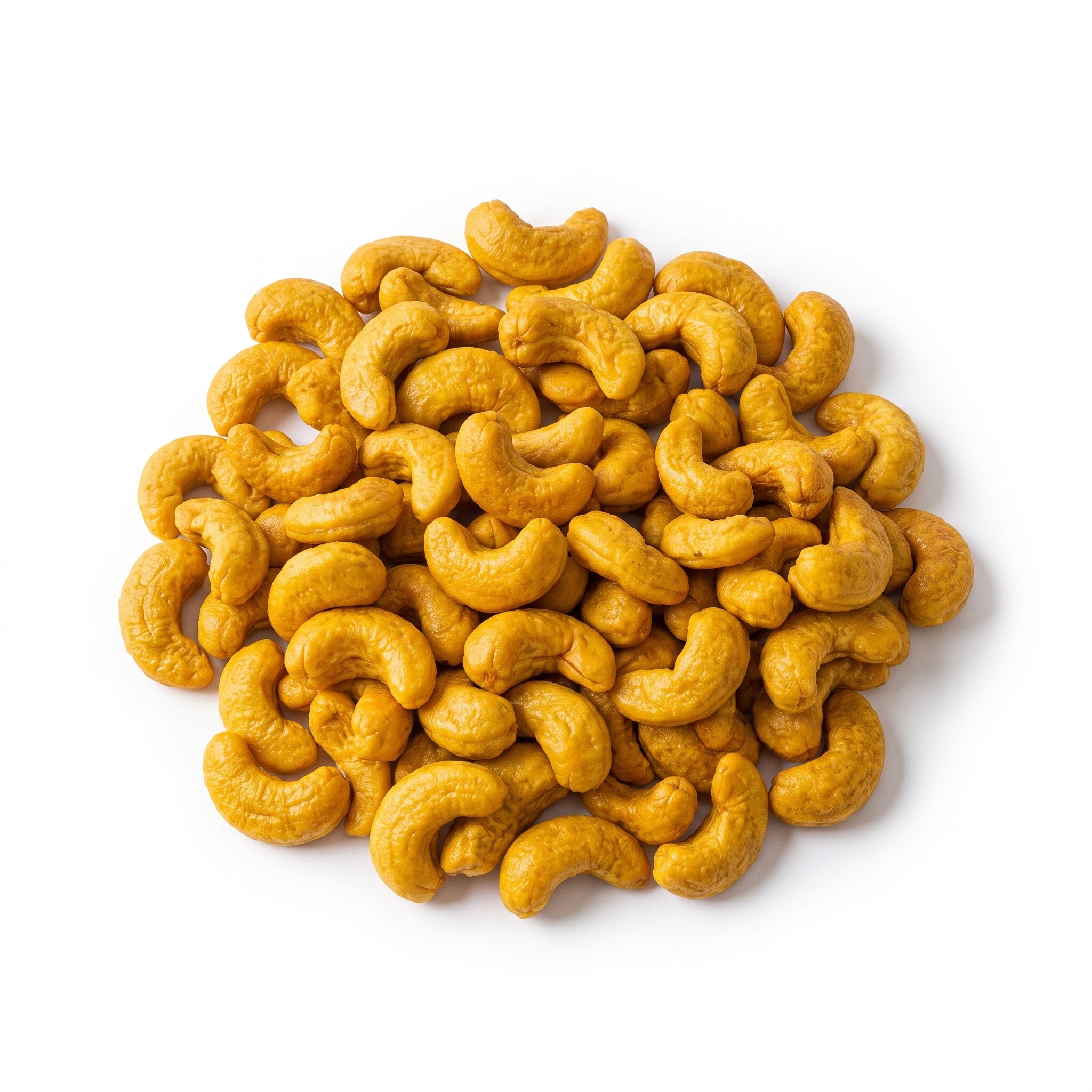
Discover Our Saffron Lime Cashews
Experience a delicious twist on classic cashews with our Saffron Lime Cashews. Combining the rich, aromatic flavour of saffron with a refreshing citrusy lime kick. Perfect for snacking, sharing with friends, or enjoying as a flavourful treat.
Shop Saffron Lime CashewsHow to Properly Store Raw and Roasted Cashews?
- Keep both types in an airtight container somewhere cool, dark, and dry. Cashew fat is fairly stable, but heat, light, and air still turn it rancid over time.
- As a typical guide, raw kernels keep for a few months in a cool cupboard, about six months in the fridge and up to a year in the freezer. Unopened roasted bags follow the best-before date, and once opened they're best finished within a few weeks. Salted ones draw moisture, so reseal firmly.
- If you buy a 1kg bag, don't leave all of it in the opened pack. Decant a few weeks' worth into a jar for the cupboard and freeze the rest in a sealed bag. Let frozen nuts come to room temperature before opening, or condensation can make them soft.
Rancidity gives itself away:
-
A smell of paint, crayons or old cooking oil
-
A bitter or sour aftertaste
-
A rubbery, limp texture instead of a snap
-
A darker, oily-looking surface
Rancid nuts rarely make anyone ill, but they taste awful, so bin them. Mould is a different matter. White or green fuzz, or a musty smell, means the whole batch goes.
The Ultimate Guide to Honey Roasted Cashews Nutrition Facts
Food Safety & Aflatoxin Standards in the UK:
- Aflatoxins are toxins made by moulds that can grow on nuts, seeds and grains in warm, humid conditions during growing, drying or storage. The UK sets legal maximum levels for them, and nuts sold to consumers must comply.
- The limits are measured in micrograms per kilogram and cover aflatoxin B1 and total aflatoxins. They're stricter for nuts sold ready to eat than for nuts destined for further sorting. The rules were inherited from EU law and carried into UK law, and the Food Standards Agency publishes the current figures.
- Roasting does not reliably destroy aflatoxins, which are heat-stable. Safety comes from sourcing, testing and dry storage instead. Buy from sellers who are open about origin and best-before dates, and discard any nut that looks mouldy or smells musty.
A good pack should show:
-
A best-before date and batch code.
-
The country of origin.
-
Clear allergen information, with cashew emphasised in the ingredients.
-
Storage advice and a resealable or sealed pack.
-
Salt and oil listed if the nuts are roasted.

Discover Our Honey Roasted Cashews
Indulge in the irresistible combination of creamy cashews and golden honey. Our Honey Roasted Cashews offer a delicious balance of natural sweetness, rich nutty flavour, and satisfying crunch. Perfect for everyday snacking and sharing.
Shop Honey Roasted CashewsCashew Nut Allergy and UK Allergen Labelling:
- Cashew nut allergy is a tree nut allergy, and reactions can be severe. Clinical studies have recorded serious reactions to minimal amounts. Roasting doesn't change that, so raw and roasted are equally unsafe for someone with the allergy.
- Cashew also cross-reacts often with pistachio, which is why people allergic to one are usually advised to be tested for the other.
- UK law lists tree nuts, cashews included, among 14 allergens that must be emphasised in the ingredients list. "May contain" warnings are voluntary, but treat them seriously.
- If you suspect a cashew nut allergy, see your GP rather than testing yourself with a snack, and ask about an allergy clinic referral if reactions have been strong.
The Complete Guide to Organic Cashews
What Is the Price of Raw and Roasted Cashews in the UK?
- At NutsOasis, raw cashew nuts start from £2.20 per 100g, and roasted cashew nuts from £2.80 per 100g. Check the product page for the live price before you order.
- Several things move the price: kernel size, whether they're whole or broken pieces, extra roasting or flavouring, pack size, and harvest quality. A 1kg bag holds about 33 portions of 30g, so divide the 1kg price by 33 to see what a daily handful costs.
- Compare per 100g, not per bag, because larger packs almost always win on that measure. In the raw vs roasted cashews price comparison, expect roasted to cost a little more per kg, since it adds a processing step. Shop raw and roasted cashews at NutsOasis.
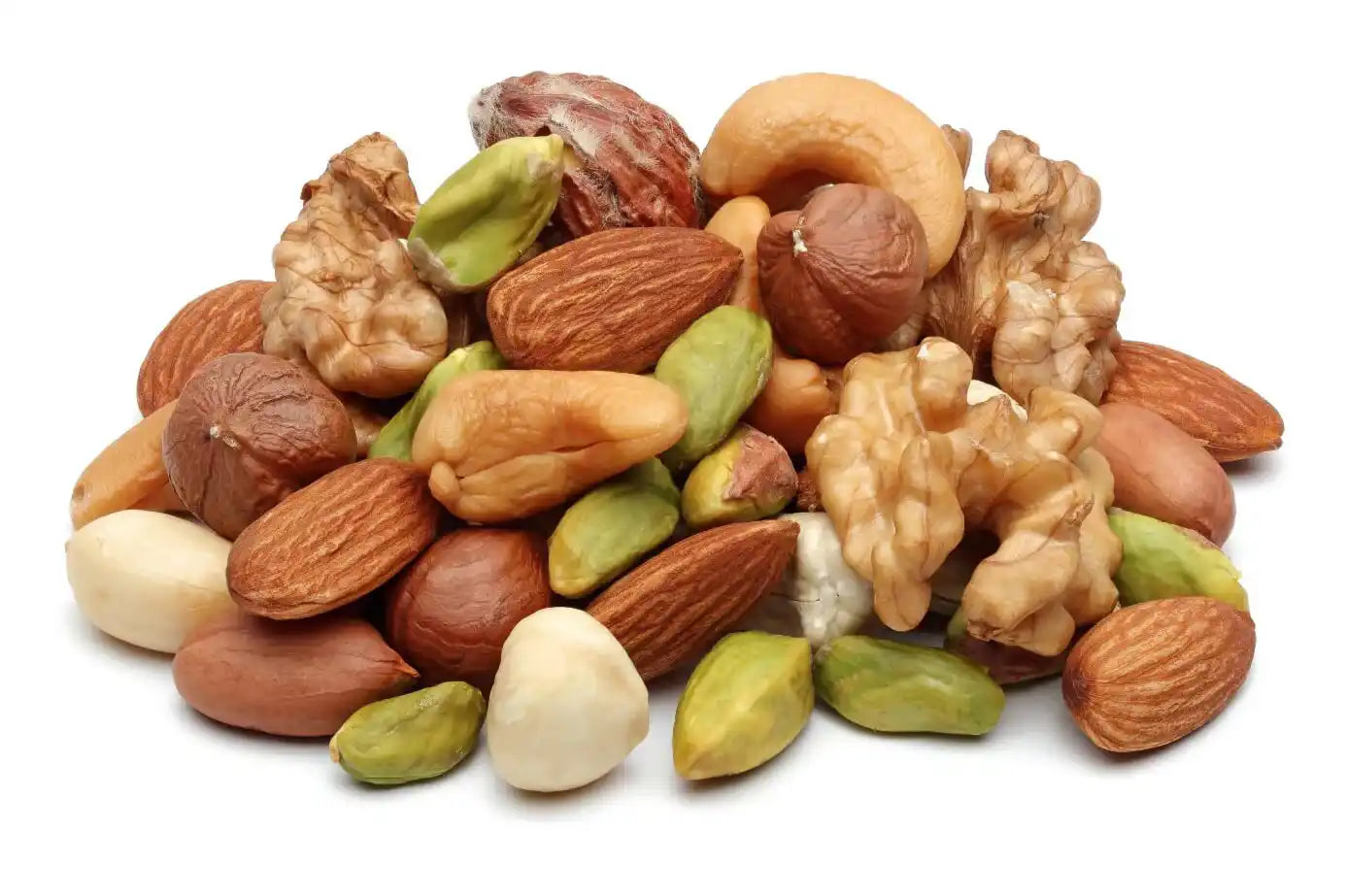
Explore Our Premium Nuts Collection
Discover our delicious selection of premium nuts, from crunchy almonds and creamy cashews to rich walnuts, pistachios, and mixed nuts. Naturally packed with protein, healthy fats, and essential nutrients, our nuts are perfect for everyday snacking, sharing, or adding flavour and texture to your favourite recipes.
Shop Premium NutsConclusion
The raw vs roasted cashews question comes down to what happens next. Cooking, blending or baking? Buy raw and keep the salt in your own hands. Eating them as they are, or tossing them into a hot wok? Roasted earns its place, ideally unsalted. Either way, weigh out 30g, store the bag airtight, and bin anything that smells of paint. Ready to stock up? Browse our cashews at NutsOasis.
FAQS
Are cashews a nut or a seed?
Botanically, the cashew is a seed that grows beneath the cashew apple. In the kitchen it's treated as a nut, and for allergy purposes it counts as a tree nut.
Are cashews keto-friendly?
Only in small amounts. A 30g portion has about 8g of net carbohydrate, which takes a big bite out of a strict keto allowance. Macadamias and pecans fit more easily.
Can you eat cashews during pregnancy?
NHS advice is that nuts are fine in pregnancy unless you're allergic to them. Unsalted cashews in a 30g portion are a sensible choice.
Where do cashews come from?
Most cashews sold in the UK are grown in West Africa, India or Vietnam. Vietnam and India dominate the shelling, so many African nuts travel there before being packed for export.
What do cashew grades like W320 mean?
W stands for whole kernels, and the number is roughly how many fit in a pound. Lower numbers mean bigger nuts. Broken pieces and splits cost less and suit sauces and baking.