Are Peanuts a Nut or a Legume? Facts and Allergy Tips
Are peanuts a nut or a legume? Botanically, they are legumes, related to peas and lentils, yet we eat them like nuts, shop for them in the nut aisle, and argue about them at the pub. That gap between science and the kitchen matters more than it sounds, especially if you have an allergy or you are counting protein. Here is what peanuts really are, how they grow, and how to buy good ones.
Are Peanuts a Nut or a Legume?
- Peanuts are legumes. They belong to the Fabaceae family, alongside peas, lentils, chickpeas and soya beans, and the short version fits on a mug: peanuts are legumes not nuts.
- The confusion is fair. A peanut has a hard shell, a crunchy kernel and a high fat content, so it looks and tastes like a nut. Shops stock it next to the cashews and almonds, and recipes treat it the same way.
- Ask a botanist, "Are peanuts a nut or a legume?" and you will hear legume within a second. Ask a cook, and you will hear nut. Both have a point, and the next section explains why.
- The plant's full name is Arachis hypogaea, which also gives us the word groundnut, a name you will still see on some ingredient lists and in recipes from Africa and Asia.
Explore Our Peanuts Collection
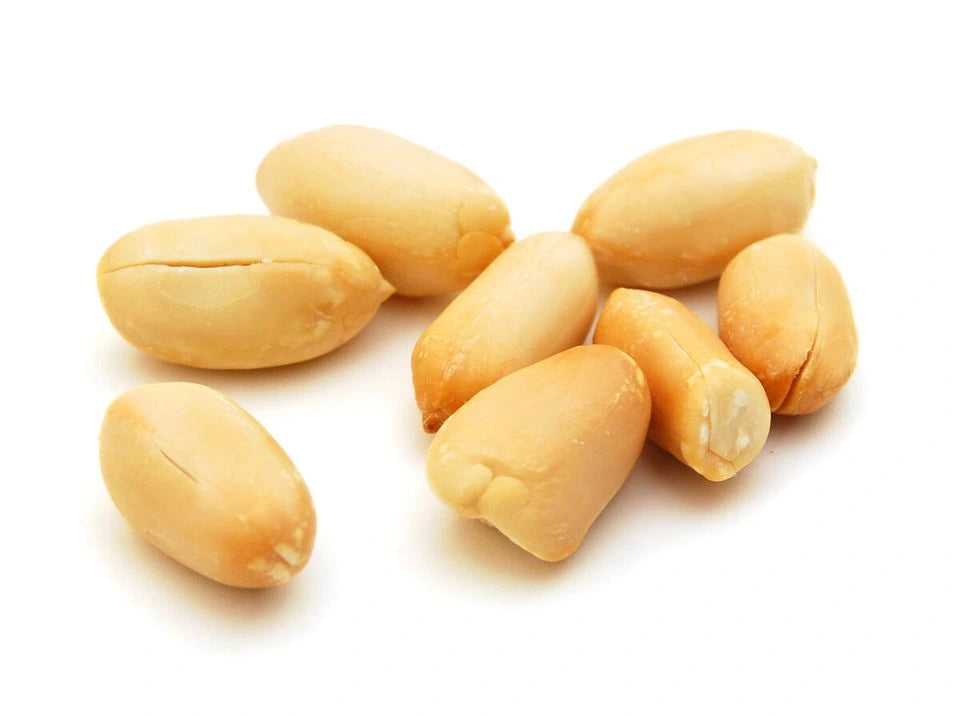
Discover our range of delicious peanuts, offering a satisfying crunch and rich, nutty flavour. Whether you prefer them roasted, salted, or plain, peanuts are a versatile snack for everyday enjoyment and sharing with family and friends.
Shop PeanutsBotanical Nut vs Culinary Nut: Why Science and Language Disagree?
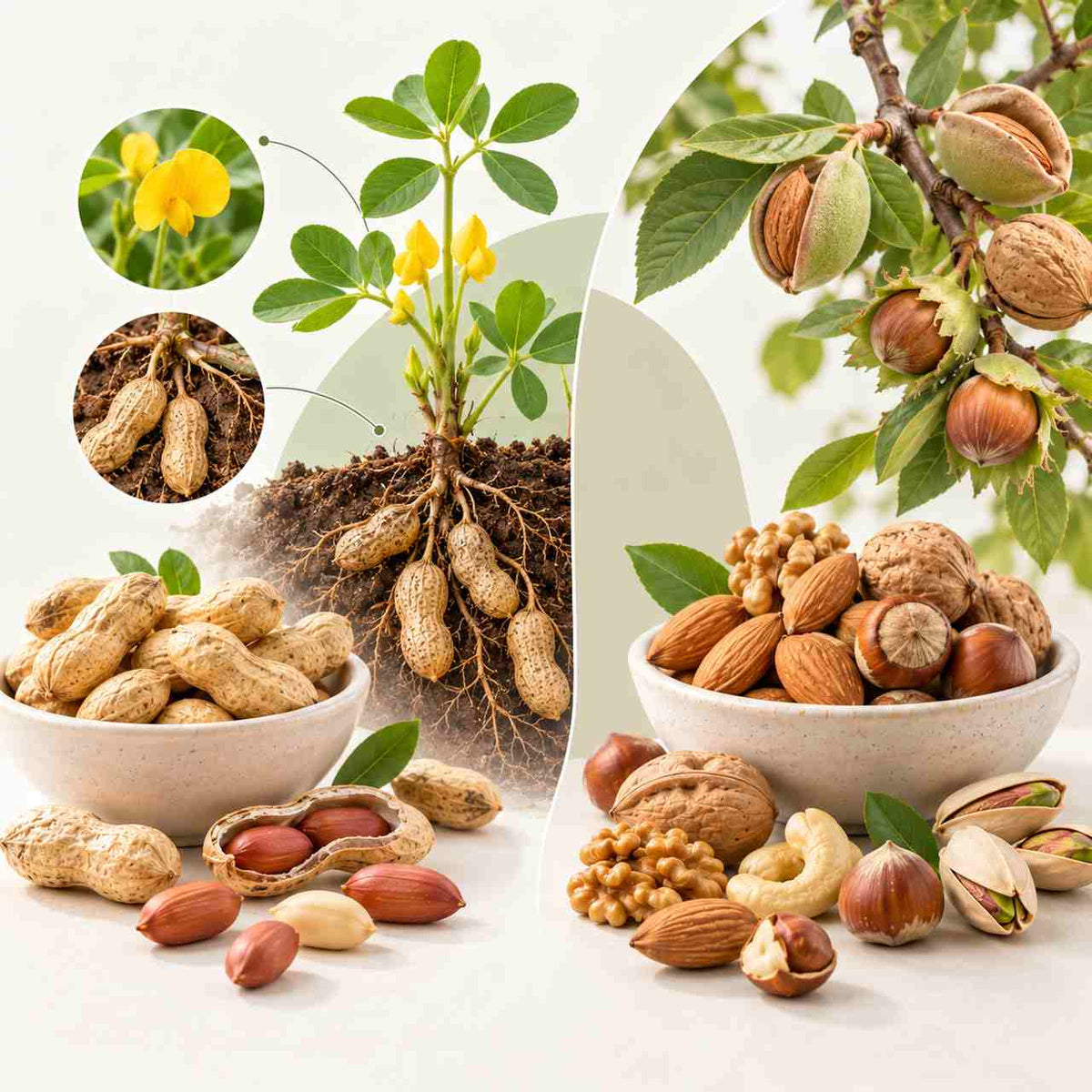
- In botany, a true nut is a single-seeded fruit with a hard wall that stays closed when ripe. Hazelnuts, chestnuts and acorns qualify. Almonds, walnuts, cashews and pecans do not. They are seeds from inside a fleshy fruit, which makes plenty of the "nuts" in your cupboard botanical impostors too.
- So the dispute is bigger than peanuts. Kitchen language is looser. To a cook, a nut is any dry, oily, edible kernel in a shell, and that definition happily takes in peanuts, Brazil nuts, and even pine nuts.
- That explains why people asking whether peanuts are legumes or nuts get two confident answers. Are peanuts nuts when you're cooking? Yes, in every way that counts at the hob. In the garden, no.
- British food law adds a twist. Allergen rules list peanuts and tree nuts as separate items, so are peanuts considered nuts or legumes by the label? Neither, strictly speaking. They get a line of their own.
Types of Peanuts and How to Choose the Right One?
Why Peanuts Are Classified as Legumes?
- The answer to "are peanuts a nut or a legume" depends on the fruit. A legume is a pod holding seeds, and a peanut shell is exactly that, with the kernels inside as the seeds. Crack one open and you will often find two, like peas in a pod.
- The plant backs it up. Peanut leaves look like clover, the flowers resemble sweet peas, and the roots host bacteria that pull nitrogen from the air, a habit beans and lentils share.
Do peanuts grow underground?
Yes, and it is the oddest part of the story. The plant flowers above ground, with small yellow blooms that last about a day. Once pollinated, the stalk beneath each flower bends down and pushes into the soil. The pod forms and ripens a few centimetres below the surface, which is why peanuts are dug up at harvest rather than picked. It is also one more reason they sit awkwardly with tree nuts, which hang from branches.
Are peanuts a bean?
Not exactly. Peanuts and beans share a family but sit in different genera, so are peanuts beans? Cousins, yes. Twins, no. That family tie is a big part of why peanuts are so rich in protein.

Discover Our Salted Peanuts
Enjoy the satisfying crunch and savoury flavour of our roasted salted peanuts. Perfect for snacking, sharing with friends and family, or serving at gatherings, they offer a delicious combination of roasted taste and a touch of salt.
Shop Salted PeanutsPeanut Allergy vs Tree Nut Allergy:
These are two separate conditions, though they often travel together. Peanut allergy involves proteins from a legume. Tree nut allergy involves proteins from nuts such as almonds, hazelnuts, walnuts, and cashews.
Is a peanut a tree nut?
- No. Peanuts grow on a low plant, tree nuts grow on trees, and the two come from different plant families. That is why having one allergy does not automatically mean you have the other.
- Separate does not mean unrelated, though. Allergy UK says people with a peanut allergy have around a 30 to 40 per cent chance of developing a tree nut allergy as well, because similar proteins appear in both. The charity also puts tree nut allergy at about 2 per cent of UK children and 0.5 per cent of adults.
- Peanut allergy can also overlap with reactions to other legumes, such as lentils and peas, and to sesame, according to the Children and Young People's Allergy Network Scotland.
- If you are reading this because of an allergy, the answer to "are peanuts a nut or a legume" matters less than the label. Peanuts appear in bold in the ingredients list, and "may contain" warnings are there for a reason. If you suspect an allergy, see your GP rather than testing it yourself with a handful.
Celebrate With Crunchy Christmas Chocolate Covered Peanuts Treats
Are Peanuts Good for You?
For most people, yes, in sensible portions. Peanuts supply protein, fibre, unsaturated fat, vitamin E, magnesium and folate, usually at a price well below most tree nuts.
Are peanuts high in protein?
For a plant food, very. A 100g serving of raw peanuts has roughly 26g of protein, ahead of almonds and well clear of walnuts. Pulses tend to be protein-heavy, and peanuts follow the family pattern.
Nutrient comparison table per 100g, raw:
| Nutrient | Peanuts | Almonds | Walnuts |
|---|---|---|---|
| Energy (kcal) | 567 | 579 | 654 |
| Protein (g) | 25.8 | 21.2 | 15.2 |
| Total fat (g) | 49.2 | 49.9 | 65.2 |
| Saturated fat (g) | 6.8 | 3.8 | 6.1 |
| Fibre (g) | 8.5 | 12.5 | 6.7 |
Roasting changes the figures slightly, so check your own label.
Each has its strengths. Walnuts carry more omega-3 fat, almonds bring more fibre and calcium, and peanuts win on protein and cost. All three are energy-dense, so the size of the handful matters more than the type.

Discover Our Roasted Salted Red Skin Peanuts
Enjoy the satisfying crunch and savoury flavour of our roasted salted red skin peanuts. Perfectly suited for everyday snacking, sharing with friends and family, or enjoying as a tasty treat whenever cravings strike.
Shop Red Skin PeanutsRaw vs. Roasted vs. Salted Peanuts: Which Is Healthiest?
| Comparison Factor | Raw Peanuts | Dry-Roasted Unsalted Peanuts | Roasted Salted Peanuts | Honey-Roasted Peanuts |
|---|---|---|---|---|
| Overall Healthiness | Healthy option | Best choice for everyday snacking | Suitable in moderation | Less suitable for regular snacking due to added sugar |
| Protein, Fat & Calories | Similar to roasted peanuts | Roasting has little effect on protein, fat, or calories | Similar nutritional profile, with added salt | May contain added sugars |
| Taste | Greener, slightly beany flavour | Richer roasted flavour | Roasted flavour with added salt | Sweet, honey-coated flavour |
| Salt Content (per 100g) | No added salt if plain | No added salt | 1.7g | — |
| Sugar Content (per 100g) | No added sugar if plain | No added sugar if plain | Not specified | 44.1g |
| UK Daily Intake Reference | — | — | 0.5g of salt is about 8% of the 6g daily maximum for adults | 13g is about 43% of the 30g daily limit for free sugars |
| Recommended Use | Suitable for cooking and snacking | Recommended for everyday snacking | Best enjoyed occasionally or in moderation | Limit frequent consumption due to high sugar content |
Key takeaway: Plain, unsalted peanuts—raw or dry-roasted—are the preferred everyday option. The British Nutrition Foundation also recommends choosing unsalted nuts.
Peanuts Good for You A Complete Health and Diet Guide
How to Fit Peanuts Into a Healthy UK Diet?
- The Eatwell Guide places nuts in its beans, pulses, fish, eggs, meat and other proteins group. NHS portion guides built on it put one portion of nuts at 30g, roughly a small handful.
- In practice, the answer to "are peanuts a nut or a legume" hardly changes your plate, because 30g is 30g either way. It comes to around 170 calories, so peanuts work better as a snack or topping than as a side.
- Sprinkle them over porridge, stir them into a stir-fry, or pair a handful with an apple in the mid-afternoon slump.
Are peanuts keto?
- In small amounts, yes. A 30g handful has roughly 2 to 3g of net carbs once the fibre is taken off, so plain peanuts can fit a keto plan if you stick to a single handful. Honey-roasted and caramelised ones are out because of the sugar.

Discover Our Honey Peanuts
Enjoy the irresistible combination of crunchy peanuts and sweet honey flavour. Our honey peanuts make a delicious snack for everyday enjoyment, sharing with friends, or adding a sweet and savoury twist to your snack time.
Shop Honey PeanutsHow to Choose High-Quality Peanuts?
- A few quick checks separate good peanuts from tired ones.
-
A short ingredients list: Plain roasted peanuts should say peanuts, and perhaps salt.
-
Plump, evenly coloured kernels: Shrivelled or dark ones point to age or poor storage.
-
A fresh, nutty smell: A sharp or stale smell means the oils are going off.
-
Sealed packaging: Look for a best-before date well ahead.
-
Skin-on or blanched: This is a matter of taste. Red skins add a slightly bitter edge and a bit more fibre, while blanched peanuts taste milder.
- As for what to avoid, bin any peanut that looks mouldy or tastes bitter or musty. Damp storage lets mould grow, and some of them produce harmful aflatoxins. If you are buying for someone with an allergy, read the "may contain" wording every time, even on brands you trust.
Best Raw Peanuts In The UK Guide to Buying
Where to Buy the Best Peanuts in the UK?
Look for a supplier that lists ingredients and allergen details clearly and ships quickly. NutsOasis sells peanuts in 100g, 250g, 500g and 1kg bags, so you can try a small bag before committing to a kilo.
NutsOasis prices for peanuts look like this:
-
Roasted salted peanuts: from £1.60 for 100g, £13.00 for 1kg
-
Roasted salted red skin peanuts: from £1.70 for 100g, £13.90 for 1kg
-
Honey roasted peanuts: from £2.00 for 100g, £13.50 for 1kg
-
Salted caramelised peanuts: from £2.00 for 100g, £13.50 for 1kg, and other peanut types at NutsOasis.
Prices and offers change, so check the product pages before you order. Each page lists the ingredients, nutrition and allergy information. Delivery matters as much as price with a roasted product, so look at dispatch times and packaging too.
Explore Our Mixed Nuts Collection
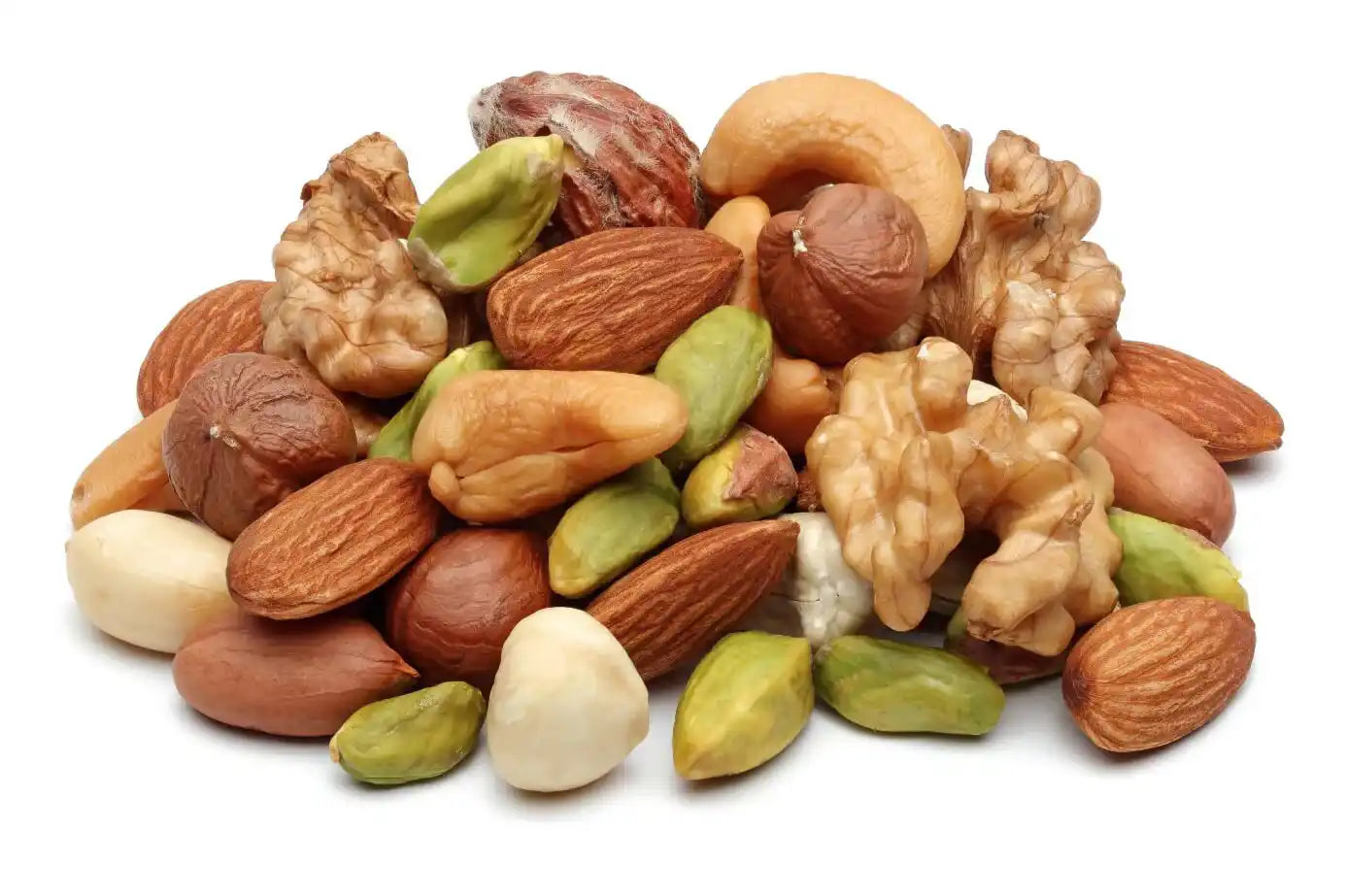
Discover our delicious selection of premium mixed nuts, bringing together a variety of natural flavours and satisfying textures. Perfect for everyday snacking, sharing with friends and family.
Shop Mixed NutsConclusion
So, are peanuts a nut or a legume? They are legumes that behave like nuts in the kitchen, and both answers are useful. Use the botanical one when you are thinking about allergies and the culinary one when you are cooking. Keep to a 30g portion, choose unsalted when you can, and treat sweet coatings as a treat. Ready to stock up? Browse the peanut range at Nutsoasis and start with a 250g bag.
FAQS
Can babies eat peanuts?
Yes. Peanuts can be introduced from around six months, when your baby is ready for solid foods. Offer them finely ground or as smooth peanut butter mixed into food or thinned to a suitable consistency. Never give babies whole peanuts or thick spoonfuls of peanut butter, as these can pose a choking risk. If your baby has eczema, a diagnosed food allergy or a family history of allergies, speak to your GP or health visitor before introducing peanuts.
Are peanuts safe during pregnancy?
Yes. Peanuts are generally safe to eat during pregnancy unless you have a peanut allergy or your doctor or midwife has advised you to avoid them. NHS guidance does not recommend avoiding peanuts during pregnancy simply to prevent your baby from developing an allergy. Choose unsalted peanuts if you want to limit your salt intake.
Are peanuts vegan?
Plain peanuts are vegan because they are plant-based. However, flavoured and coated varieties may contain animal-derived ingredients. For example, honey-roasted peanuts are not considered vegan, while chocolate-coated peanuts may contain milk. Always check the ingredients list to make sure a product meets your dietary requirements.