Nuts for Hair Growth Which Types Work and How to Eat
Nuts for hair growth can make sense when they are part of a balanced diet that supports the scalp and hair follicles from the inside. Different nuts bring different strengths: almonds are often linked with vitamin E, walnuts with healthy fats, and Brazil nuts with selenium. Still, hair loss can come from hormones, low iron, stress, illness, or medical conditions, so food should not be treated like a cure. This article keeps the advice practical, safe, and useful for Nutsoasis shoppers.
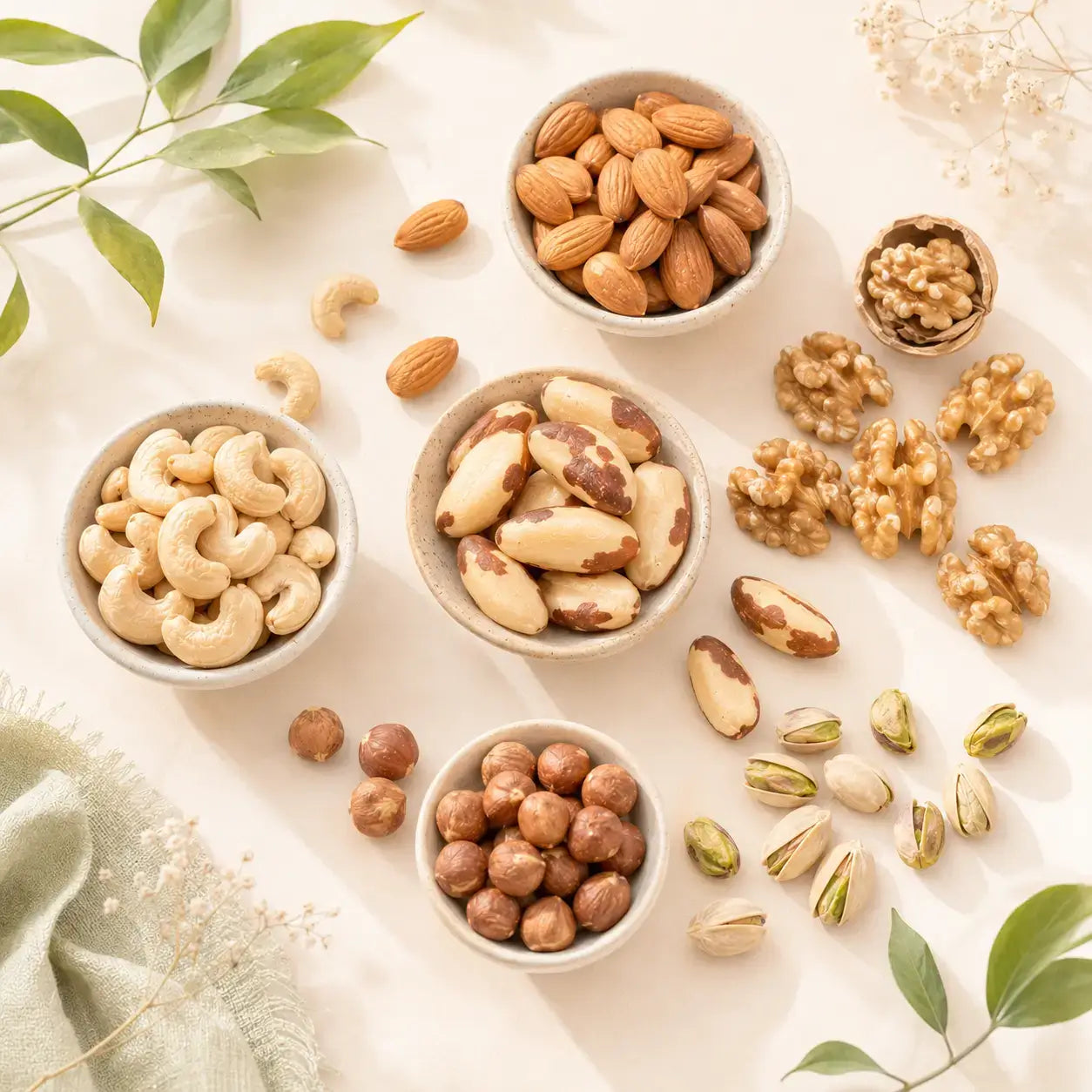
Which Nuts Are Best for Hair Growth?
- Almonds are a strong everyday choice because they provide vitamin E, magnesium and plant protein. They work well in breakfast bowls, yoghurt or snack pots when you want something simple and useful.
- Walnuts are helpful for people focusing on scalp comfort because they contain plant-based omega-3 fats. They also bring a softer texture, so they suit porridge, salads and baking.
- Cashews can be useful for zinc and copper, two minerals linked with normal hair structure and pigment support. Their creamy taste also makes them easy to add to savoury meals.
- Brazil nuts stand out for selenium, but they should be used carefully because they are much richer than most nuts in this mineral.
- Hazelnuts add vitamin E and a naturally sweet flavour, making them a good choice when replacing sugary toppings.
Walnut What Is It Good For Discover Its Top Benefits
Do Nuts Help Hair Grow Faster?
- Yes, but only in an indirect way. Nuts do not push hair follicles to grow faster like a medical treatment; they help supply nutrients the body uses for normal hair growth.
- Hair growth depends on the full cycle of the follicle. If the diet is weak, very low in calories, or missing key nutrients, shedding may become more noticeable before length improves.
- A good hair growth diet should support the body every day with protein, iron, zinc, healthy fats, and enough overall energy. Nuts can contribute to that pattern, but they cannot replace meals.
- The question "does biotin grow hair" needs care. Low biotin can affect hair, but extra biotin is not proven to make healthy hair grow faster when there is no deficiency.
- Visible change also takes time. Hair grows slowly, so diet changes usually need months, not days.
Can Eating Nuts Reduce Hair Loss?
- Yes, but only in specific situations; nuts may help reduce diet-related shedding when weak eating habits, low nutrient intake, or very restrictive dieting cause the problem.
- Hair loss is not always a food problem. It can come from genetics, thyroid imbalance, illness, stress, childbirth, scalp conditions, medication, or low iron, so nuts cannot fix every cause.
- In a sensible hair loss diet, nuts can add useful fats, minerals, and some plant protein, helping the body avoid nutritional gaps that may show in hair quality.
- They are most useful when they replace poor snack habits. Skipping meals, crash dieting, or living on sugary snacks can leave the body short of steady nourishment.
- Do not expect quick results. Even when diet is part of the issue, shedding may take weeks or months to settle.
Healthiest Nut for You Cashews Hazelnuts and Pecans
Are Almonds Good for Hair Growth?
- Yes, almonds can support healthy hair, mainly because they bring vitamin E, magnesium, fibre, plant protein and natural fats in one simple food.
- Vitamin E matters because it helps protect cells from oxidative stress. For hair, this is best understood as support for the scalp environment, not a promise of faster growth.
- Almonds also give a modest amount of protein, which matters because hair is made from keratin, a protein structure. Still, almonds should support protein intake, not replace fish, eggs, dairy, pulses or meat.
- Magnesium adds another useful angle because low-quality diets often miss minerals, and hair health tends to suffer when the whole diet is weak.
- The best way to use almonds is sliced into yoghurt, oats or salads, or measured as a small snack.
- Choose high-quality almonds from Nutsoasis, so that the focus stays on steady nutrition and everyday use.
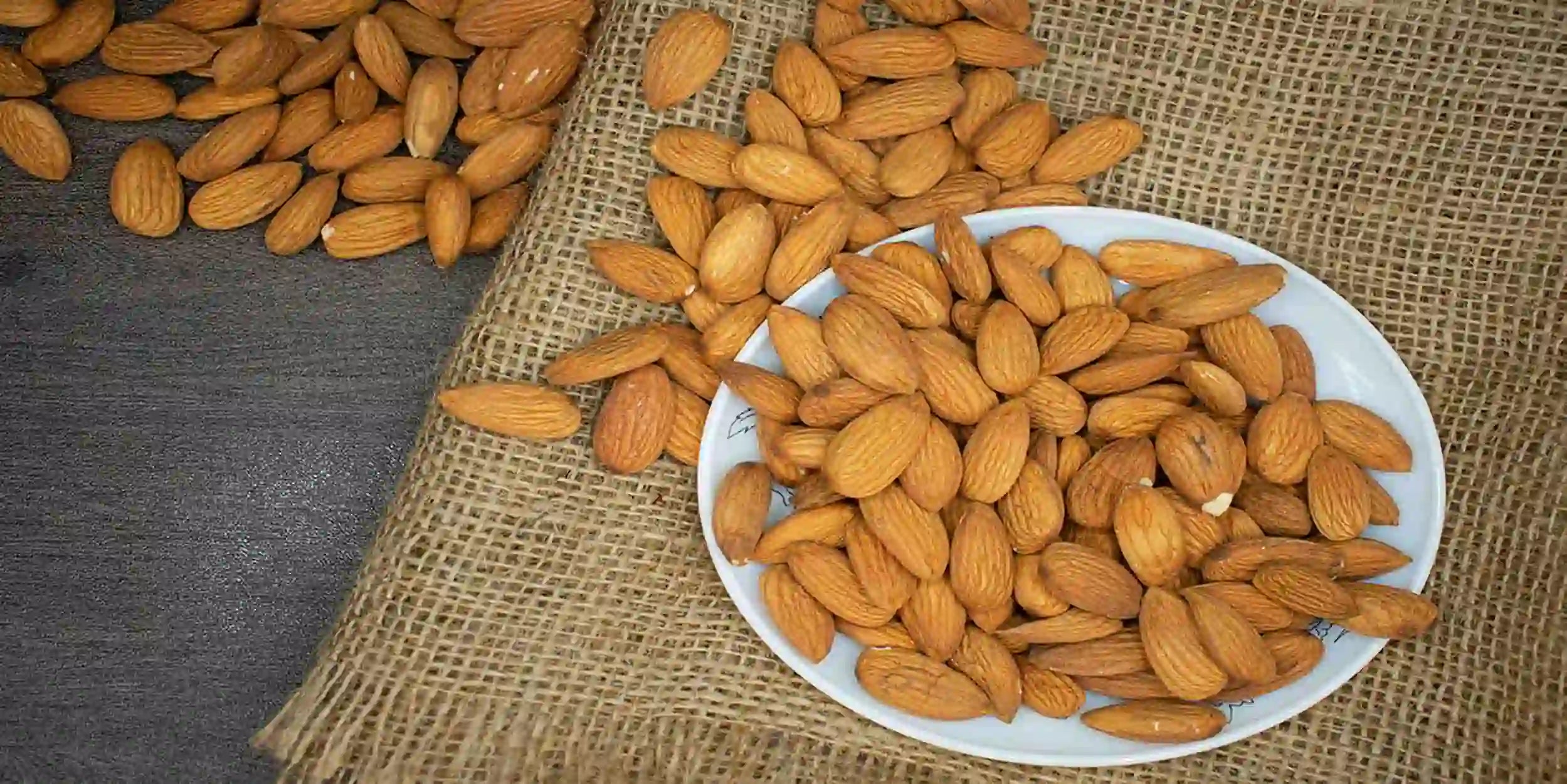
Explore Our Almond Collection
Discover our premium selection of almonds, offering a delicious combination of natural flavour, satisfying crunch, and everyday versatility. Perfect for snacking, baking, or adding to your favourite meals and recipes.
Shop AlmondsAre Walnuts Good for Hair Thickness?
- Yes, walnuts can support healthier-looking hair, but they do not make thin hair instantly thicker or replace treatment for medical hair loss.
- Their strongest point is plant-based ALA, which is why walnuts often appear in searches around omega 3 for hair growth. This does not mean they force growth, but they can support a better fat balance in the diet.
- Walnuts also help with scalp health because the scalp, like skin, needs steady nourishment from fats, minerals and enough overall food intake.
- They contain copper, manganese and vitamin E, so they bring more than just calories or crunch.
- For better results, walnuts should sit inside a wider hair growth diet that includes iron-rich foods, enough protein and varied fruit and vegetables.
- Use them chopped over oats, yoghurt or salads, where a small amount spreads through the meal without becoming too heavy.
Walnut What Is It Good For Discover Its Top Benefits
Are Brazil Nuts Good for Hair Growth?
- Yes, Brazil nuts can support hair nutrition, mainly because they provide selenium, a mineral involved in normal cell protection and thyroid-related processes that can affect overall hair condition.
- Their role is different from almonds or walnuts. Brazil nuts are not mainly about vitamin e for hair growth or omega 3 for hair growth; their strength is the small but powerful selenium contribution.
- This is where nuts for hair growth need a careful explanation, because Brazil nuts can be useful in small amounts but risky when eaten too often.
- They may fit into a balanced hair loss diet, especially when meals are low in varied minerals, but they do not replace iron for hair growth or enough daily protein.
- The caution is important. More Brazil nuts does not mean better hair. Too much selenium may work the other way and contribute to brittle hair or shedding.
- A sensible routine is to use Brazil nuts occasionally while keeping other nuts in rotation for wider hair growth vitamins, minerals and scalp-supporting nutrients.
Are Brazil Nuts Good for You? Selenium Portions and Risks
How Many Nuts Should I Eat Each Day for Healthy Hair?
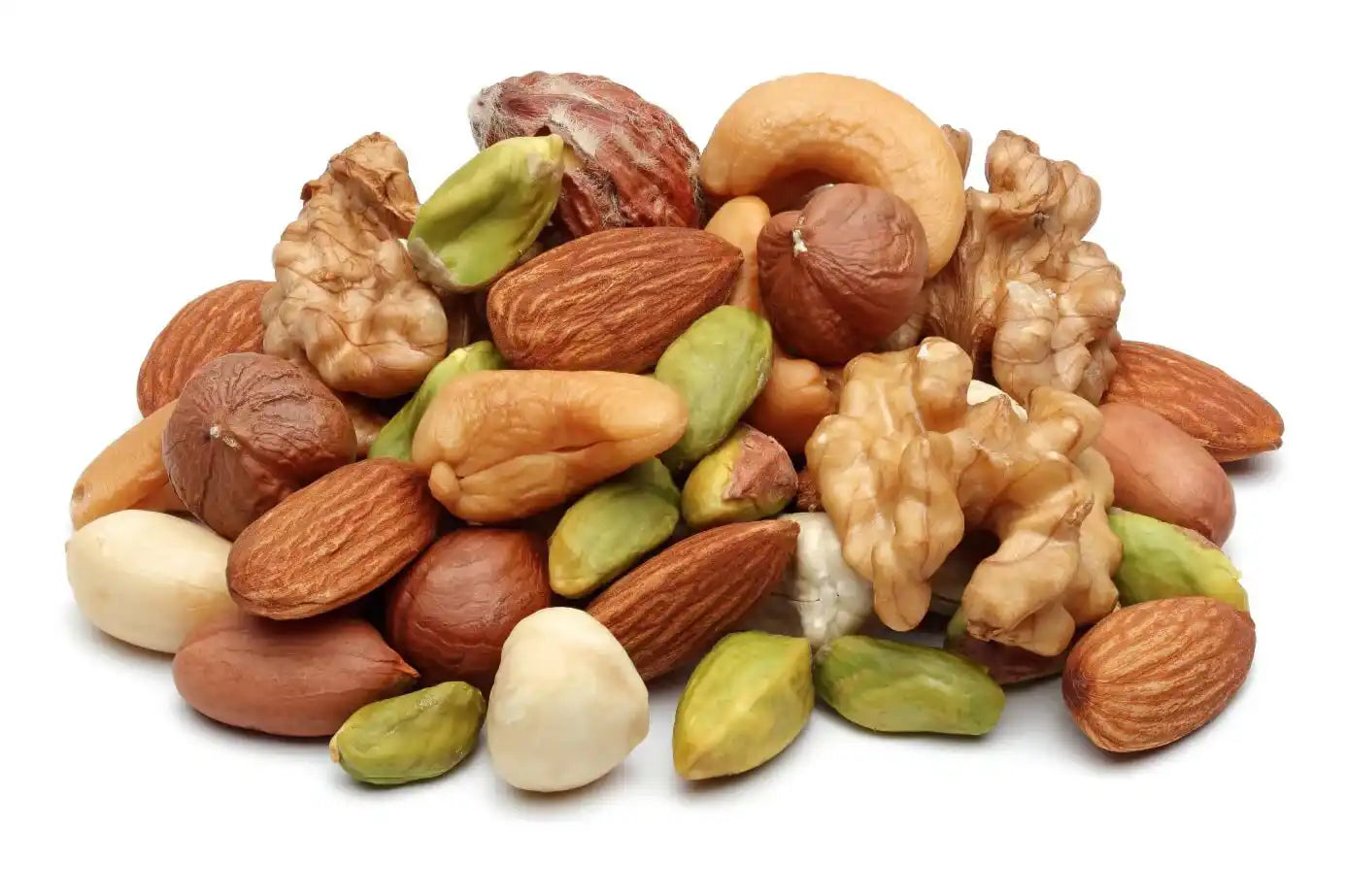
- A sensible daily amount is about 30g of mixed unsalted nuts, roughly a small handful. For hair nutrition, this amount is enough to add useful fats, minerals and some plant protein without making the snack too heavy.
- Do not make the whole handful Brazil nuts. Use a mix such as almonds, walnuts, cashews and hazelnuts, then keep Brazil nuts occasional because of their selenium content.
- For protein for hair growth, nuts help, but they are only a top-up. Hair still needs stronger protein sources across the day, such as eggs, yoghurt, fish, pulses, tofu or lean meat.
- If your focus is zinc for hair, include cashews or peanuts in the mix, but do not depend on nuts alone to correct a deficiency.
- The best habit is portioning before eating: one small bowl, snack pot or breakfast topping, not repeated handfuls from the pack.
Explore Our Nuts Collection
Discover our premium selection of nuts, carefully chosen for their quality, delicious flavour, and satisfying crunch. From everyday snacking to baking and sharing, find the perfect nuts to suit every taste and occasion.
Shop NutsWhich Nuts Contain the Most Biotin?
- Almonds are a practical nut choice when discussing biotin for hair growth, not because they work alone, but because they can sit easily inside a wider diet that also includes protein, iron, zinc and healthy fats.
- Peanuts can also help, although they are technically legumes. In real shopping and snacking, many people still group them with nuts, especially in mixes and peanut butter.
- Walnuts, hazelnuts, and cashews may add small amounts too, but they should not be treated as the main biotin source in the diet.
- The question "does biotin grow hair" needs a careful answer. Biotin matters if intake is low, but extra biotin does not guarantee faster growth for someone who already gets enough.
- For stronger hair growth vitamins support, biotin should sit beside zinc, iron, protein, vitamin E, and healthy fats, not work alone.
- Product labels may not always show biotin, so choose plain mixed nuts for variety rather than chasing one exact number.
Discover the Amazing cashew nuts and almonds benefits
Which Nuts Are High in Zinc for Hair Health?
| Choice | Why It Matters for Zinc and Hair Health | Best Way to Use It |
|---|---|---|
| Cashews | One of the better nut choices for zinc. Useful when someone is trying to improve zinc for hair through everyday food, not supplements alone. | Add a small handful to snack pots, savoury bowls, stir-fries, rice dishes or homemade trail mixes. |
| Peanuts | A practical zinc contributor, even though they are technically legumes. They are affordable, easy to find and simple to use often. | Use in porridge, yoghurt bowls, peanut-based snacks or mixed nuts, while watching salt and sugar coatings. |
| Almonds | Lower in zinc than cashews, but still useful because they also bring vitamin E, plant protein and crunch. | Use sliced, chopped or whole in breakfast bowls, baking, snack boxes and nut mixes. |
Zinc supports normal cell growth and repair, which is relevant to scalp tissue and hair follicles. Still, zinc for hair growth works best inside a wider diet, not as one isolated nut choice.
Healthiest Nut for You Cashews Hazelnuts and Pecans
Do Nuts Provide Enough Protein for Hair Growth?
- No, nuts do not usually provide enough protein on their own for hair growth, but they can make a useful contribution inside a balanced diet.
- Hair is built from keratin, so protein for hair growth matters, especially when someone eats very little, skips meals, or follows a restrictive diet.
- Nuts give some plant protein, but they are also high in fat, so eating more nuts just to raise protein can quickly add too many calories.
- Peanuts and almonds are stronger protein choices than walnuts or macadamias, but they still work better as a top-up than a main protein food.
- For better hair nutrition, combine nuts with eggs, Greek yoghurt, fish, chicken, tofu, lentils, beans or chickpeas across the day.
- A good hair growth diet uses nuts for extra nutrients and texture, while the main protein should come from fuller meals.
Good Nuts for Protein Ranked by Grams and Daily Use
Can Brazil Nuts Cause Hair Loss If Eaten in Excess?
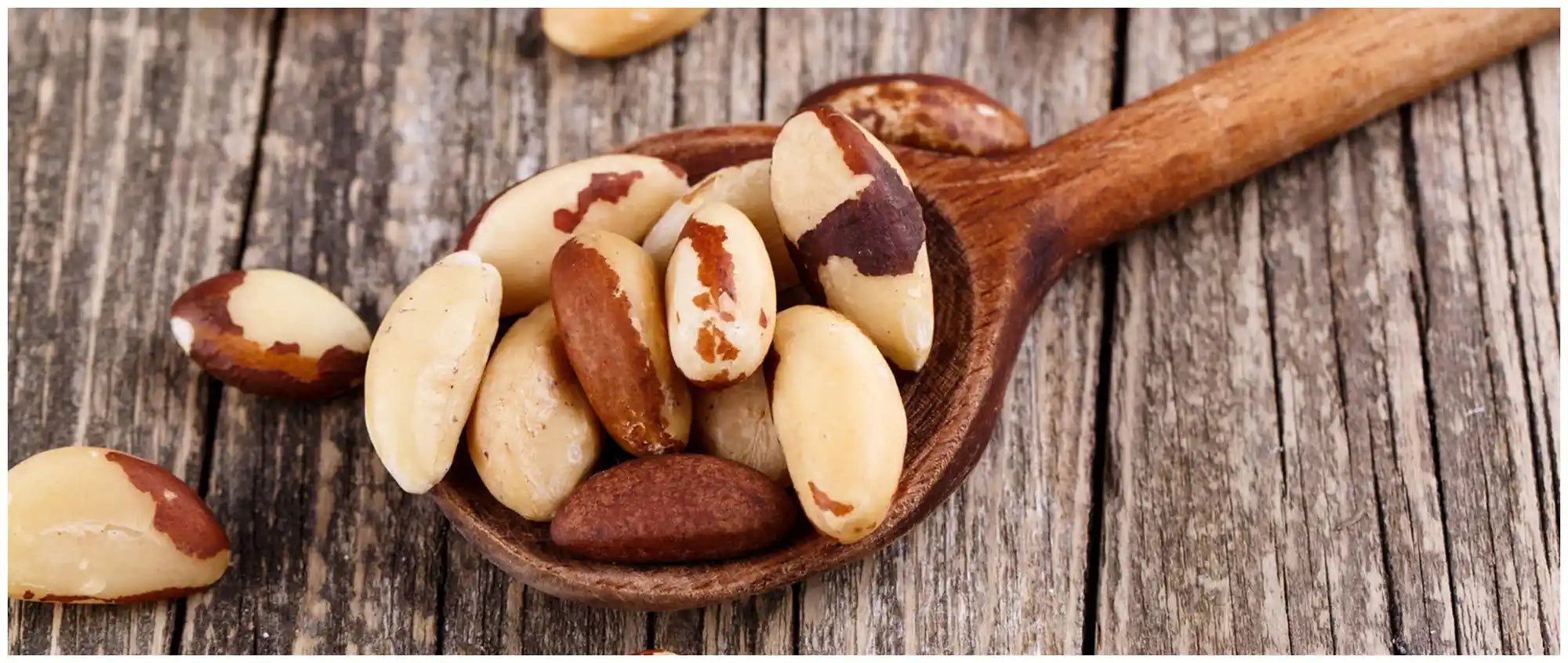
- Yes, Brazil nuts may contribute to hair loss if they are eaten too often in large amounts, mainly because of their high selenium content.
- The NHS recommends around 60 mcg of selenium per day for adult women and 75 mcg for adult men. The upper intake level varies between health authorities: the NIH sets an upper limit of 400 mcg per day for adults, while the European Food Safety Authority (EFSA) uses a more conservative upper limit of 255 mcg per day.
- This is why Brazil nuts sit in a strange place within nuts for hair growth: helpful when measured, risky when treated like ordinary snack nuts.
- Excess selenium may show up through hair shedding, brittle nails, nausea, tiredness, or a metallic taste in the mouth. So if you experience unexplained or persistent hair loss, the Trichological Society recommends seeking professional assessment to help identify the underlying cause rather than assuming it is simply related to diet.
- This is different from normal seasonal shedding or genetic hair thinning, so the pattern matters. Repeated daily overuse is the red flag.
- Anyone already taking selenium, thyroid, fertility, or immune supplements should be extra careful before adding Brazil nuts.
- For safer scalp health, use Brazil nuts occasionally and rely on a varied nut mix for everyday hair nutrition.
Explore Our Brazil Nuts Collection
Discover premium Brazil nuts with a naturally rich, creamy flavour and satisfying crunch. Whether enjoyed as a wholesome snack or added to your favourite recipes, our Brazil nuts are a delicious way to enjoy quality and natural goodness.
Shop Brazil NutsAre Salted Nuts Bad for Hair Health?
- No, salted nuts do not directly damage hair, but they are not the best daily choice when the goal is better nutrition for the scalp and follicles.
- The issue is habit. Salted nuts are easier to keep eating because the flavour is stronger, so a small snack can turn into repeated handfuls without much thought.
- Too much salt also makes the overall diet less balanced, especially if it comes from crisps, processed foods, salted snacks and takeaway meals on the same day.
- For nuts for hair growth, plain nuts are more useful because the focus stays on nutrients such as vitamin e for hair growth, healthy fats and minerals, not seasoning.
- Salted nuts also make it harder to judge freshness, because strong flavour can cover a flat or old taste.
- A better hair-focused routine is simple: choose unsalted nuts most days, then get iron for hair growth and omega 3 fatty acids hair growth support from the wider diet.
difference between raw and roasted nuts Unveiling the Taste Gap
Are Raw Nuts Better Than Roasted Nuts for Hair Growth?
- No, raw nuts are not automatically better than roasted nuts for hair growth. The better choice depends on freshness, roasting method, and whether salt, sugar, honey, or extra oil has been added.
- Raw nuts are useful when you want the simplest ingredient list. They fit easily into oats, yoghurt, smoothies or homemade mixes without changing the flavour too much.
- Dry-roasted unsalted nuts can still support a good hair growth diet, especially if roasting makes them easier to enjoy regularly.
- The weaker choice is heavily flavoured roasted nuts, because added salt or sugar does not improve the nutrient value for hair or scalp.
- For vitamin E for hair growth, almonds and hazelnuts can work in either raw or roasted form, as long as they are not over-processed.
- Walnuts need more care because their natural fats are delicate, so freshness matters when discussing omega 3 fatty acids hair growth.

Explore Our Raw Nuts Collection
Discover our premium selection of raw nuts, naturally delicious and carefully selected for quality. With their authentic flavour and satisfying crunch, they’re ideal for healthy snacking, baking, cooking, or enjoying as part of a balanced diet.
Shop Raw NutsWhat Foods Help Hair Grow Thicker in the UK?
- Hair looks stronger when the whole diet is steady, not when one "miracle food" is added. Start with proper meals that include protein, minerals, healthy fats and enough energy.
- For iron for hair growth, build meals around lean beef, eggs, sardines, lentils, chickpeas, spinach or fortified breakfast cereal. Add berries, peppers or citrus because vitamin C helps the body use plant iron better.
- Oily fish such as mackerel, salmon and sardines can support scalp health through omega-3 fats, while eggs bring protein and useful micronutrients in a simple UK meal.
- Greek yoghurt, milk, cheese or fortified soya alternatives can help when the diet is low in protein or iodine.
- Pulses are a good budget option: lentil soup, bean chilli, hummus and chickpea salads all work well.
- Nuts for hair growth are best used as toppings or snacks beside these foods, not as the full hair plan.
Should I See a GP If I Am Losing Hair Despite Eating Well?
- Yes, you should see a GP if hair loss continues despite eating well, because diet is only one possible part of the picture.
- A good hair loss diet may support the body, but it cannot diagnose thyroid problems, low ferritin, hormonal changes, autoimmune hair loss, medication effects or scalp disease.
- Book an appointment sooner if the shedding is sudden, patchy, painful, itchy, linked with redness, or comes with tiredness, weight change, heavy periods or feeling unusually cold.
- The GP may look at the scalp pattern, ask about stress, illness, childbirth, medicines and family history, then decide whether blood tests are needed.
- Be careful with self-treating through hair growth vitamins without testing. Taking random supplements can hide the real issue or duplicate nutrients you already get.
- Nuts for hair growth can stay in the diet, but persistent hair loss needs a proper cause checked, not just more "healthy" foods.
Conclusion
Better hair nutrition starts with small choices you can repeat every week, and plain quality nuts are one of the easiest places to begin. Almonds, walnuts, Brazil nuts, cashews and hazelnuts can add the kind of nutrients many hair-focused diets look for, from vitamin E and zinc to healthy fats, plant protein and minerals. The smartest way to use nuts for hair growth is to build a varied nut routine instead of relying on one "miracle" food. With Nutsoasis, you can choose fresh, plain nuts that fit naturally into breakfast bowls, snack pots, baking and simple UK meals, making healthier hair-supporting eating easier to keep up.
Is it better to eat whole nuts or nut butter for hair-focused nutrition?
Whole nuts are usually easier to control because you chew them slowly and notice the portion. Nut butter can still fit, but check the label first. The best jars are simple, with no added sugar or heavy salt.
Can nuts help with hair breakage?
Nuts may support a better hair growth diet, but breakage is often different from shedding. Breakage usually starts along the hair shaft and may be linked with heat styling, bleaching, tight hairstyles or rough brushing.
What is the best time to eat nuts for hair health?
There is no special "hair growth time" for eating nuts. What matters more is using them consistently in normal meals. A small portion at breakfast, in a lunch box, or as an afternoon snack can make the routine easier without treating food like medicine.
Can I mix nuts with seeds for scalp health?
Yes, mixing nuts with seeds can make snacks more varied. Pumpkin seeds, sunflower seeds, chia or flax can sit beside nuts in oats, salads or homemade snack mixes. This gives a wider spread of textures and nutrients instead of depending on one ingredient.
Are nuts enough for a vegan hair-supporting diet?
No, not by themselves. A vegan diet still needs planned sources of protein for hair growth, iron, iodine, vitamin B12, and omega fats. Nuts can help, but they should sit beside pulses, tofu, fortified foods, whole grains, seeds, and medical advice if hair loss becomes heavy.