Good Nuts for Protein Ranked by Grams and Daily Use
Good Nuts for Protein can make everyday snacks feel more satisfying than crisps, biscuits or sweets. Still, not all nuts give the same amount of protein. Peanuts, almonds, pistachios and cashews are often stronger choices, while walnuts, Brazil nuts and macadamia nuts have their own place for healthy fats and minerals. This guide helps you compare the options in a simple, practical way. Nutsoasis gives UK buyers an easier route to fresh nuts for protein-focused snacks, breakfast bowls and everyday recipes.
Nuts Protein Chart (per 100g):
Protein values are approximate and may vary by variety, roasting method and brand. Figures should be used as a practical guide, not a fixed medical value.
| Nut or Seed | Protein per 100g |
|---|---|
| Pumpkin seeds | 30.2g |
| Peanuts | 25.8g |
| Almonds | 21.2g |
| Pistachios | 20.2g |
| Cashews | 18.2g |
| Walnuts | 15.2g |
| Brazil nuts | 14.3g |
| Macadamia nuts | 7.9g |
Best Nuts to Lower Cholesterol and Support Healthy Heart
8 Good Nuts for Protein:
Peanuts:
Peanuts lead the group for protein among everyday snacking nuts, offering around 7.7g of protein per 30g serving — more than almonds, pistachios or cashews in the same handful. Their protein comes alongside fibre, magnesium, niacin and healthy fats, so a small handful feels more filling than most processed snacks.
Almonds:
Almonds are one of the most well-known nuts, and their protein content makes them an excellent snack. Almonds contain 6.4g protein per 30g. In addition to protein, almonds are rich in vitamin E, fiber, and magnesium. These almond nuts are great for boosting muscle recovery and providing energy throughout the day.
Pistachios:
Pistachios benefits go beyond their delicious flavor. With about 6.1g of protein per 30g, pistachios are a protein powerhouse. These nuts also have a high content of fiber and essential amino acids, which are crucial for muscle repair and growth. Plus, pistachios are known for being lower in calories compared to other nuts.
Cashews:
Cashews provide a good amount of protein, with around 5.5g per 30g. They are also a good source of healthy fats, magnesium, and copper, which are essential for maintaining strong bones and immune health.
Walnuts:
Walnuts benefits are numerous, with their high content of omega-3 fatty acids and about 4.6g of protein per 30g. Walnuts' nutrition includes antioxidants that protect against inflammation and support heart health. They also provide essential fats, making them a great choice for overall wellness.
Brazil Nuts:
Brazil nuts are packed with nutrients, including protein (around 4.3g protein per 30g), healthy fats, and selenium, which is crucial for thyroid health and can act as a powerful antioxidant, protecting cells from damage.
Macadamia Nuts:
Macadamia nuts sit at the lower end of the protein chart at 2.4g per 30g, so they are not the first choice for protein-focused snacking. Their real value lies in their exceptionally high monounsaturated fat content, which supports heart health and provides sustained energy. Include them for variety and healthy fats, not primarily for protein.
Pumpkin Seeds:
Technically a seed, pumpkin seeds are packed with protein and nutrients. Per 30g serving provides around 9.1g of protein. They are also rich in magnesium, which is important for muscle function and energy production. Pumpkin seeds benefits include promoting heart health, improving sleep, and supporting prostate health.
Explore Our Premium Nuts Collection
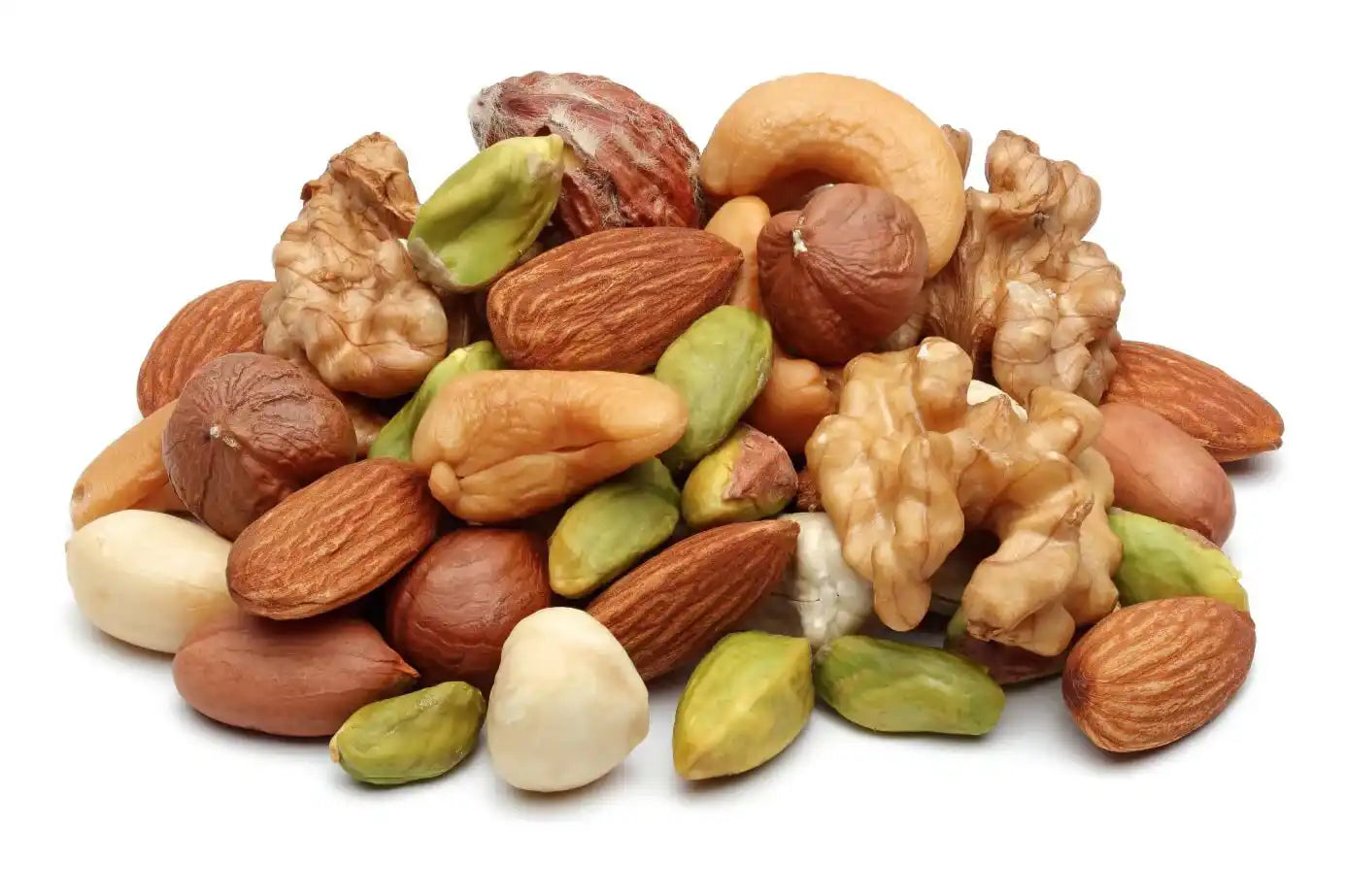
Discover a delicious selection of premium nuts, including almonds, cashews, pecans, walnuts, pistachios, and mixed nut blends. Perfect for snacking, baking, cooking, and adding natural nutrition to your routine.
Shop Premium NutsTop 5 Healthiest Nuts:
- Almonds are a strong everyday nut because they bring protein, fibre, and vitamin E together. That makes them useful when you want a snack that supports fullness and still feels simple.
- Walnuts are not the highest in protein, but they stand out for plant omega-3 fats. Their softer texture works well in oats, salads and bakes where you want richer nutrition.
- Pistachios are a smart lighter snack because they offer protein, fibre and natural colour. They also take longer to eat when in-shell, which can help with slower snacking.
- Cashews are practical for people who cook with nuts. They contain minerals such as magnesium and copper, and their creamy texture makes them useful in sauces, dips and vegan recipes.
- Brazil Nuts are best treated as a small-portion nut because they are naturally rich in selenium. A few pieces can add minerals and depth without needing a large handful.
For Good Nuts for Protein, the healthiest choice is usually a balanced mix, not one nut eaten every day in the same way.
Healthiest Nut for You Cashews Hazelnuts and Pecans
Why Are Nuts a Good Source of Protein?
- Nuts are useful because the protein comes inside a whole food, not as an isolated number. You get protein with fibre, natural fats, minerals and texture, so the snack feels more complete.
- When people ask "are nuts high in protein?", the answer depends on the nut. Peanuts, almonds and pistachios are stronger choices, while walnuts, Brazil nuts and macadamias are better known for fats and minerals.
- Protein in nuts helps with satiety, but the fat matters too. Together, they slow the snack down, so a small handful can feel more satisfying than a sweet biscuit.
- Nuts are not the same as chicken, eggs or dairy for protein density. You would not use them as the only protein source, but they work well beside oats, yoghurt, fruit, salads and smoothies.
- They also make healthy eating easier because they need no cooking. A small portion can improve a quick breakfast, lunchbox or post-work snack without much preparation.
- For Good Nuts for Protein, the smartest choice is not always the highest number. It is the nut you can use regularly, in the right portion, without adding too much sugar or salt.
Best Nuts for Diabetics in the UK
Seeds That Rival Nuts for Protein:
- Seeds deserve a place beside Good Nuts for Protein, especially if someone wants more variety than almonds, peanuts, or pistachios every day.
- Pumpkin seeds are one of the strongest choices. They are small, easy to sprinkle, and bring protein with minerals such as magnesium, zinc, and iron.
- Sunflower seeds are useful when you want something cheaper and lighter to add to salads, porridge, bread dough or homemade snack mixes.
- Hemp seeds are softer and less crunchy, but they work well in smoothies, yoghurt bowls and oat toppings because they mix in without much chewing.
- Chia seeds are not eaten for protein alone. Their real value is how they thicken liquids, add fibre and make breakfasts feel more filling.
- When people search for nuts good for protein, seeds can quietly improve the mix without changing the whole diet.
- The best approach is not nuts versus seeds. A smart snack mix can use both for protein, texture, minerals, and better flavour balance.

Explore Our Seeds Collection
Discover our premium selection of nutritious seeds, packed with natural goodness and versatile flavours. Perfect for healthy snacking, baking, cooking, adding to salads, smoothies, or porridge.
Shop SeedsBest Nuts for Protein and Weight Loss:
- Nuts can support weight-conscious eating, but only when the portion is controlled. They are filling, but they are also rich, so eating straight from the bag is where people usually go wrong.
- Almonds are a practical choice because they take time to chew and work well with fruit, yoghurt or oats. That makes the snack feel more complete.
- Pistachios are useful for slower eating, especially if you choose in-shell pistachios. The shell naturally slows the hand-to-mouth habit, which can help with portion control.
- Peanuts are strong for protein and usually feel more filling than many sweet snacks. They are better plain than coated, salted, or covered in sugar.
- Cashews can still fit, but they are easier to overeat because of their creamy taste and softer bite, so a measured handful works better.
- The protein in nuts helps satiety, but fibre, fats and texture also matter. Weight loss is never about protein alone.
- For Good Nuts for Protein, choose simple nuts, avoid heavy coatings, and build them into meals instead of treating them like unlimited snacks.
Best Nuts for Weight Loss for Easy and Balanced Diet
The Best Store to Buy Fresh Nuts Online:
- If you're looking for a reliable source to buy fresh and high-quality nuts online, look no further than NutsOasis. This store offers a wide range of fresh nuts and seeds, including almond nuts, walnuts, pumpkin seeds, and pistachios.
- Whether you're looking for a snack rich in protein or nuts for cooking and baking, NutsOasis has everything you need. The store focuses on freshness, quality, and offering a variety of organic options to ensure you get the best out of your nut consumption. Explore our diverse nuts collection!
Find the Best Brand of Nuts for Flavour and Freshness
Conclusion
Incorporating good nuts for protein into your diet is a simple and delicious way to boost your daily protein intake. Whether you enjoy them as snacks, add them to salads, or blend them into smoothies, nuts are versatile and packed with nutrients. From almond protein to walnut nutrition, each nut offers unique health benefits, making them a valuable part of a healthy diet. To get the freshest and highest-quality nuts, shop at NutsOasis and enjoy the numerous health benefits these nutritious nuts provide.
Which nut has the highest protein per 100g?
Pumpkin seeds lead at around 30g of protein per 100g, followed by peanuts at 25.8g. Among tree nuts, almonds offer the strongest protein at approximately 21g per 100g, making them the most practical high-protein nut for everyday snacking.
How many nuts should I eat per day for protein?
A 30g handful — roughly 23 almonds, 49 pistachios, or 15–18 cashews — gives you 4–8g of protein depending on the variety. This is a useful daily addition alongside other protein sources like eggs, yoghurt, or legumes, rather than a standalone protein replacement.
Are nuts a complete protein?
Most nuts are not complete proteins on their own because they lack sufficient amounts of one or more essential amino acids. Pistachios are the exception among common tree nuts — they are one of the few to contain all nine essential amino acids. Pairing nuts with oats, yoghurt or seeds improves the overall amino acid balance.
Can nuts help with muscle building?
Nuts support muscle-focused eating because they provide protein, magnesium, zinc and healthy fats together. A 30g serving of almonds gives around 6g of protein — comparable to one egg. They work best as a complement to higher-protein foods rather than the primary muscle-building source.