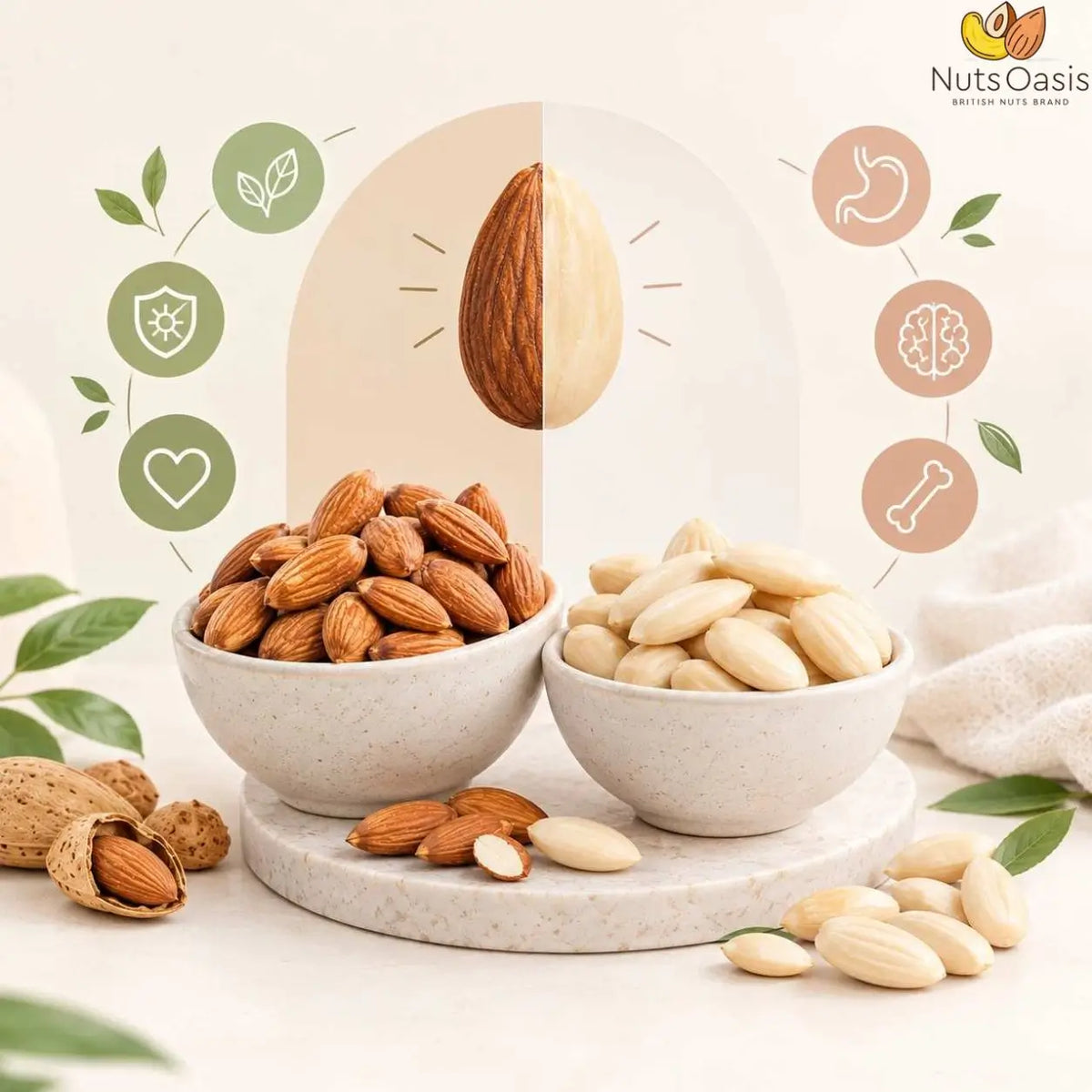
Peeled vs Unpeeled Almonds Which Are Healthier to Buy?
Peeled vs unpeeled almonds sounds like a trivial question until you're standing in the baking aisle. One bag is creamy white, another is brown and papery, and the labels don't say why it matters. It does, a little. This guide compares nutrition, digestion, mineral absorption, and taste, then shows where each type earns its place in a UK kitchen, so you buy the right bag the first time.
What Is the Difference Between Peeled and Unpeeled Almonds?
- The difference is the skin. Unpeeled almonds, sold as natural or skin-on almonds, keep the thin brown layer that covers the kernel. Blanched almonds have had it removed after a short soak in hot water, leaving a pale, smooth nut.
- Nothing else about the nut changes. Both start as the same kernel from the same tree, and blanching is a light heat treatment that loosens the skin so it slips off. That's why peeled vs unpeeled almonds taste and behave differently without being different nuts. You can buy peeled almonds ready-made, or blanch almonds at home.
- That one thin layer shifts fibre, antioxidants, flavour, texture, and how long the nuts keep. The sections below take each in turn.
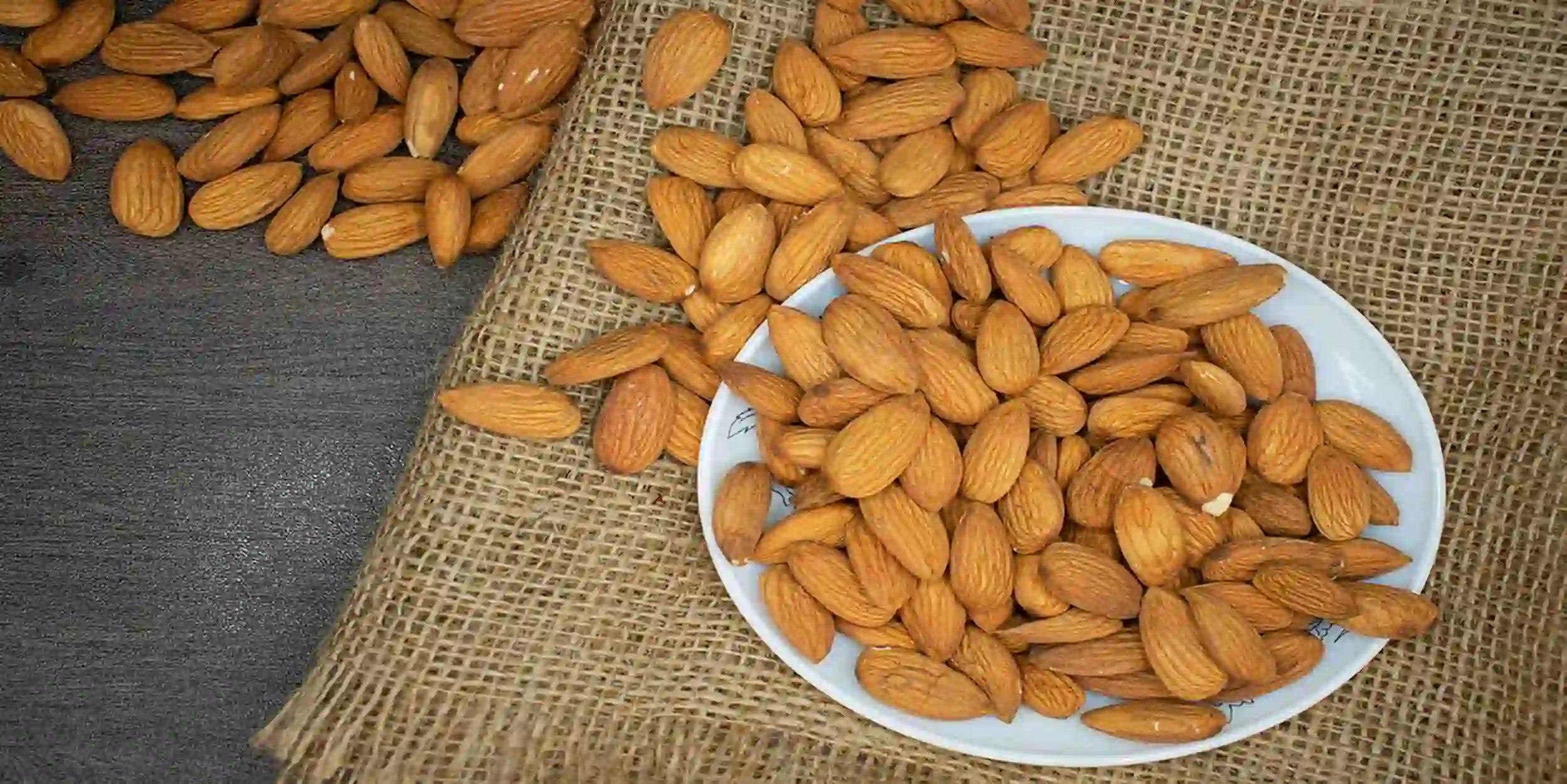
Explore Our Premium Almonds Collection
Discover the delicious taste and natural goodness of our premium almonds. Rich in vitamin E, fibre, and healthy unsaturated fats, almonds make a satisfying snack and a versatile ingredient for baking, cooking, or adding to your dishes.
Shop AlmondsPeeled vs Unpeeled Almonds: Nutrition Compared (per 100g):
Are blanched almonds healthy? Yes. The gap between peeled vs unpeeled almonds is smaller than most health blogs suggest, and it sits in fibre and plant compounds rather than calories or protein. The figures come from USDA data for raw skin-on kernels and blanched ones.
| Per 100g | Almonds with Skin (Raw) | Blanched (Peeled) |
|---|---|---|
| Calories | 550 kcal | 590 kcal |
| Protein | 21.2g | 21.4g |
| Fat | 49.9g | 52.5g |
| of which monounsaturated | 31.6g | 33.4g |
| of which saturated | 3.8g | 4.0g |
| Carbohydrate | 21.6g | 18.7g |
| Fibre | 12.5g | 9.9g |
| Vitamin E | 25.6mg | 23.8mg |
| Riboflavin (vitamin B2) | 1.14mg | 0.71mg |
| Magnesium | 270mg | 268mg |
| Calcium | 269mg | 236mg |
| Potassium | 733mg | 659mg |
| Iron | 3.7mg | 3.3mg |
| Zinc | 3.1mg | 3.0mg |
If you came for almonds protein per 100g, it's about 21g either way, so peeling doesn't affect it. USDA tests different batches, which means differences of a few per cent are noise.
Most of us eat almonds by the handful, not by the 100g, so here is what 30g looks like in practice:
| Per 30g Handful | With Skin | Blanched |
|---|---|---|
| Calories | 174 kcal | 177 kcal |
| Protein | 6.4g | 6.4g |
| Fibre | 3.8g | 3.0g |
| Vitamin E | 7.7mg | 7.1mg |
Peeling swaps about a gram of fibre for a few extra calories, and that's the whole story. The rest is texture and taste.
Dietary Fibre Levels in Skin-On vs Skinless Almonds:
- Fibre is where peeling costs you most. USDA lists 12.5g per 100g for almonds with skin and 9.9g for blanched, around a fifth less. A 2026 study of Spanish Largueta almonds found a bigger drop, from 12.2g to 7.5g.
- In a 30g handful, that's roughly 3.8g against 3.0g. Adults in the UK are advised to eat 30g of fibre a day, and most of us fall short, so skin-on almonds do slightly more of the work. A difference of under a gram per portion won't make or break your diet.
Almond Nuts Nutritional Information Complete Guide
Antioxidants: Polyphenols and Flavonoids in Almond Skins:
- Most of an almond's flavonoids sit in the brown skin. Tufts researchers found that flavonoids from almond skins are bioavailable and work with vitamins C and E to make LDL cholesterol more resistant to oxidation, though the work was done in the lab and in hamsters.
- In the Largueta study, skin-on kernels also carried more than double the β-carotene of blanched ones.
- Lab work suggests the skin may feed beneficial gut bacteria too. So the case for almond skin benefits is plausible, and it's one reason to leave the skin on the almonds you eat plain.
- We couldn't find a trial comparing peeled and unpeeled almonds head-to-head, so treat the extra antioxidants as a likely bonus rather than a proven edge.
- Almond skins are a by-product of blanched almond production, which is a quiet reminder that peeling removes something, even if we can't yet say how much it matters to your health.
Vitamin E and Healthy Monounsaturated Fat Retention:
- Peeling barely dents vitamin E or the heart-friendly fat, because both live in the kernel. Blanched kernels keep about 93% of the vitamin E in raw ones, and a 30g handful of either gives roughly 7mg, well over half the 12mg UK reference intake.
- Monounsaturated fat reads slightly higher in the blanched sample because the kernel makes up a bigger share of the weight once the skin has gone. Riboflavin is the other number that moves, falling from 1.14mg to 0.71mg per 100g.

Discover Our Premium Raw Almonds
Enjoy the naturally delicious taste and satisfying crunch of our premium raw almonds. Rich in vitamin E, fibre, protein, and healthy unsaturated fats, these versatile nuts are perfect for snacking, baking, or adding to recipes.
Shop Raw AlmondsAre Peeled Almonds Easier on the Stomach?
- Possibly, but nobody has tested it properly. We couldn't find a trial comparing peeled and unpeeled almonds in people with IBS, so anything stronger than "some people find them gentler" would be guesswork.
- There are sensible reasons to try the peeled kind if skin-on nuts sit heavily. The skin adds insoluble fibre and tannins, which give that dry, astringent bite, and a smoother nut can be easier to chew down.
- Peeling won't remove what triggers symptoms for most people, though. Almonds contain fructans and galacto-oligosaccharides, two FODMAPs found in the kernel. The Almond Board of California's low-FODMAP guide puts a serving at about 10 almonds, whichever type you buy.
- Try 10 of each on separate days, chew thoroughly, and note how you feel. Soaking overnight softens the skin and makes it easy to rub off, which gives you a halfway option: a peeled nut you've prepared yourself, with a gentler texture and no shop-bought blanching. If symptoms persist, a GP or registered dietitian can help you work out what's behind them.
Good Nuts for Protein Ranked by Grams and Daily Use
Do Almond Skins Affect Mineral Absorption?
- Barely. Phytic acid binds iron, zinc, and calcium in the gut, and both types contain it. Removing it is harder than the soaking trend implies: in one study, soaking almonds for 24 hours cut phytic acid by less than 5%. Another found soaking whole almonds had little effect on how much iron or zinc was available.
- The skin adds tannins, the same family of compounds that makes strong tea astringent. Tannins and phytic acid can bind non-haem iron, but they also act as antioxidants, and a 30g handful is a small dose. The choice between peeled vs unpeeled almonds won't decide your iron status.
- Almonds are a modest iron source either way, giving about 1.1mg per handful. If iron matters to you, the bigger levers are pairing plant-based iron with vitamin C and keeping tea and coffee away from meals.
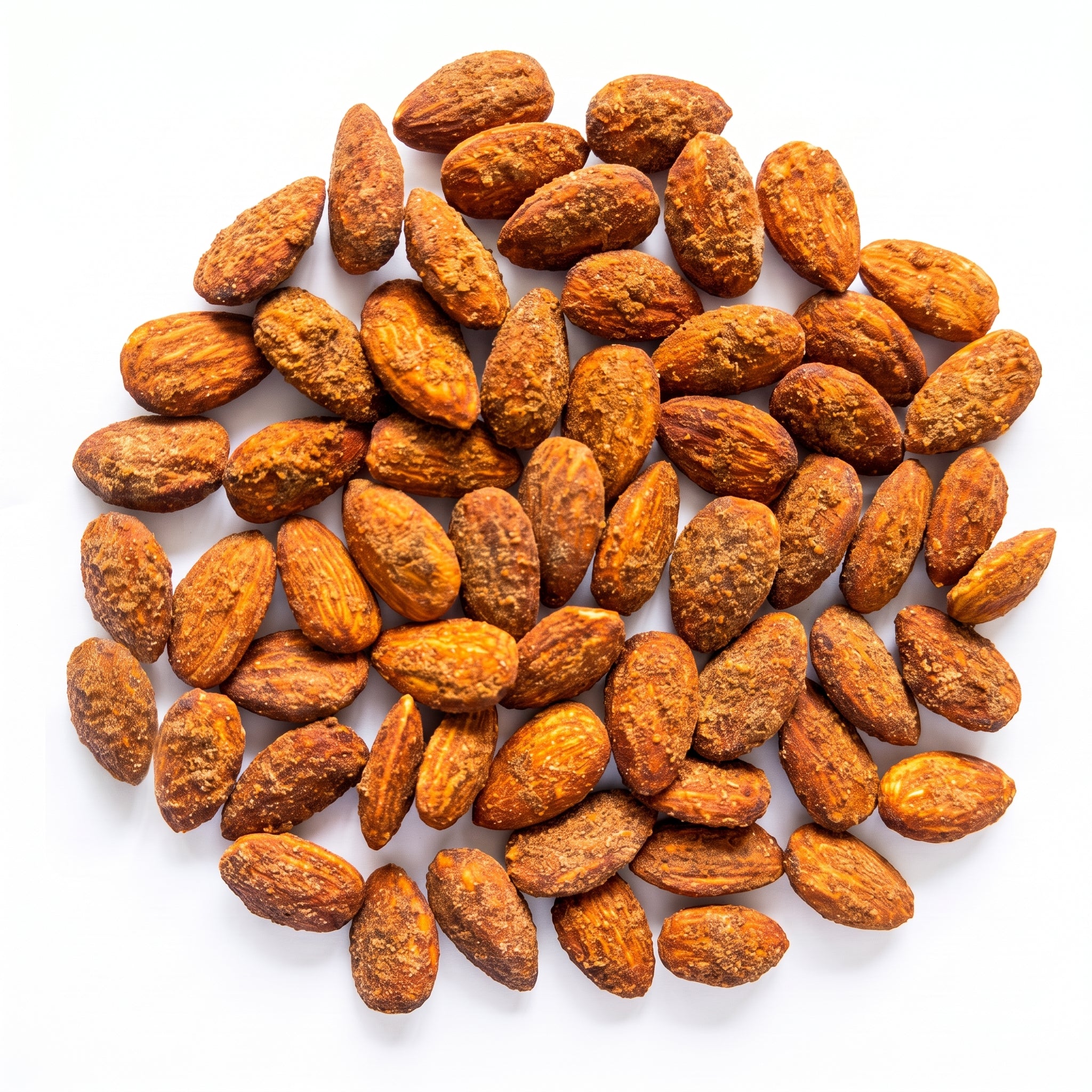
Discover Our Hot Smoked Almonds
Enjoy the bold, smoky flavour and satisfying crunch of our Hot Smoked Almonds. A delicious savoury snack for those who love a little extra flavour, perfect for sharing or enjoying whenever cravings strike.
Shop Hot Smoked AlmondsCardiovascular, Skin, and Cognitive Health Benefits:
- Most of the benefits below come from almonds as a whole food rather than the skin alone, so they apply to both types.
- Heart. A meta-analysis of 15 randomised trials covering 534 people found almonds lowered LDL cholesterol by about 5.8 mg/dL, roughly 0.15 mmol/L, with no weight gain. That's a modest effect, useful alongside a good diet rather than instead of medical treatment. If you take cholesterol medication, keep taking it and mention any big diet change to your GP.
- Skin. In a six-month trial of 49 postmenopausal women with fair skin, wrinkle severity was around 15% lower in those eating almonds for about a fifth of their daily calories. It was small and funded by the Almond Board of California, so it's a promising sign rather than a promise.
- Memory and focus. The weakest evidence. A 12-week trial in older, overweight adults found almonds improved LDL cholesterol and alertness, but tested memory, executive function, and processing speed didn't change.
Discover the Amazing cashew nuts and almonds benefits
Taste and Texture Differences:
- Unpeeled almonds taste earthy and slightly bitter, with a firmer, chewier crunch. The skin is papery on some batches, which is the bit people tend to mean when they say raw almonds taste dry.
- Blanched ones are sweeter, creamier and smoother, and their clean white colour disappears into batters and sauces. Roasting deepens the flavour of both, but the peeled nut stays the milder of the two.
- Pairing matters here. Skin-on almonds stand up to strong partners such as smoked paprika, rosemary, dark chocolate and cheese. If you're buying for children who dislike the papery skin, peeled is an easy win.
- The milder blanched nut suits delicate flavours like vanilla, orange blossom, cardamom and cherry, and it won't muddy the colour of a pale cake.

Discover Our Roasted Almonds
Enjoy the rich, nutty flavour and satisfying crunch of our premium roasted almonds. Perfect for everyday snacking, sharing with family and friends, or adding a delicious crunch to your favourite recipes.
Shop Roasted AlmondsWhat Are the Best Uses for Peeled and Unpeeled Almonds in UK Kitchens?
- Reach for the peeled kind where colour and smoothness count: frangipane and Bakewell tarts, marzipan, macarons, almond cream and the silky sauces behind a good korma. Flaked almonds for cakes and desserts are usually blanched too, which is why they look so pale. The marzipan layer on a Christmas cake is the classic example, since ground blanched kernels give the smooth, pale paste you want under the icing.
- Use unpeeled almonds where texture and flavour matter more: snacking, granola, flapjacks, rustic loaves, crumble toppings, salads and spiced roasted nuts. The skin adds colour and a little bite.
- Ground almonds follow the same split. In the almond flour vs almond meal debate, flour is finely ground blanched kernels, pale and smooth, while meal is coarser and usually made with the skins, so it looks speckled and tastes nuttier. Check the label, because shops use the terms loosely.
- Can you swap one for the other? Usually yes, with a visible price. Skin-on ground almonds will turn a sponge speckled and slightly denser, and macarons will come out darker and less smooth. Going the other way, a blanched batch in granola or flapjacks works fine and simply looks paler.
- Almond milk and almond butter follow the same logic. Blanched kernels give a smoother, paler result, while skin-on ones make something nuttier, slightly grainy, and higher in fibre.
How to blanch almonds at home:
-
Pour boiling water over the almonds in a bowl, or simmer them for one minute.
-
Drain and rinse under cold water so you can handle them.
-
Pinch each almond at the wide end, and the kernel slips out.
-
Dry thoroughly on a tea towel before using or storing, because damp almonds spoil fast.
Soaked Almonds Benefits for Skin Weight and Digestion
Peeled vs Unpeeled Almonds: Which Should You Choose?
On peeled vs unpeeled almonds, the short answer is this: for everyday snacking and the most fibre and antioxidants, choose unpeeled. For pale, smooth baking, choose peeled. The table makes the trade-offs quick to scan.
| Point | Unpeeled | Peeled |
|---|---|---|
| Fibre | Higher | Lower |
| Antioxidants | More, from the skin | Fewer |
| Flavour | Earthy, slightly bitter | Sweet, mild |
| Texture | Chewy, crunchy | Smooth, creamy |
| Shelf life | Longer | Shorter |
| Best for | Snacking, granola, rustic baking | Marzipan, macarons, sauces, delicate cakes |
| Price per kg | Usually lower | Usually higher |
If you can only buy one bag, make it unpeeled. It's cheaper, keeps longer, and covers snacking, granola, and most baking. Add a bag of peeled when a recipe really needs a pale, smooth finish.
-
Snacking daily: unpeeled.
-
Baking where colour matters: peeled.
-
Sensitive stomach: try peeled, with a small portion.
-
Storing for months: unpeeled.
-
Bake often: keep a bag of each.
-
Nut allergy: neither. Peeling doesn't remove the allergens, which sit in the kernel.
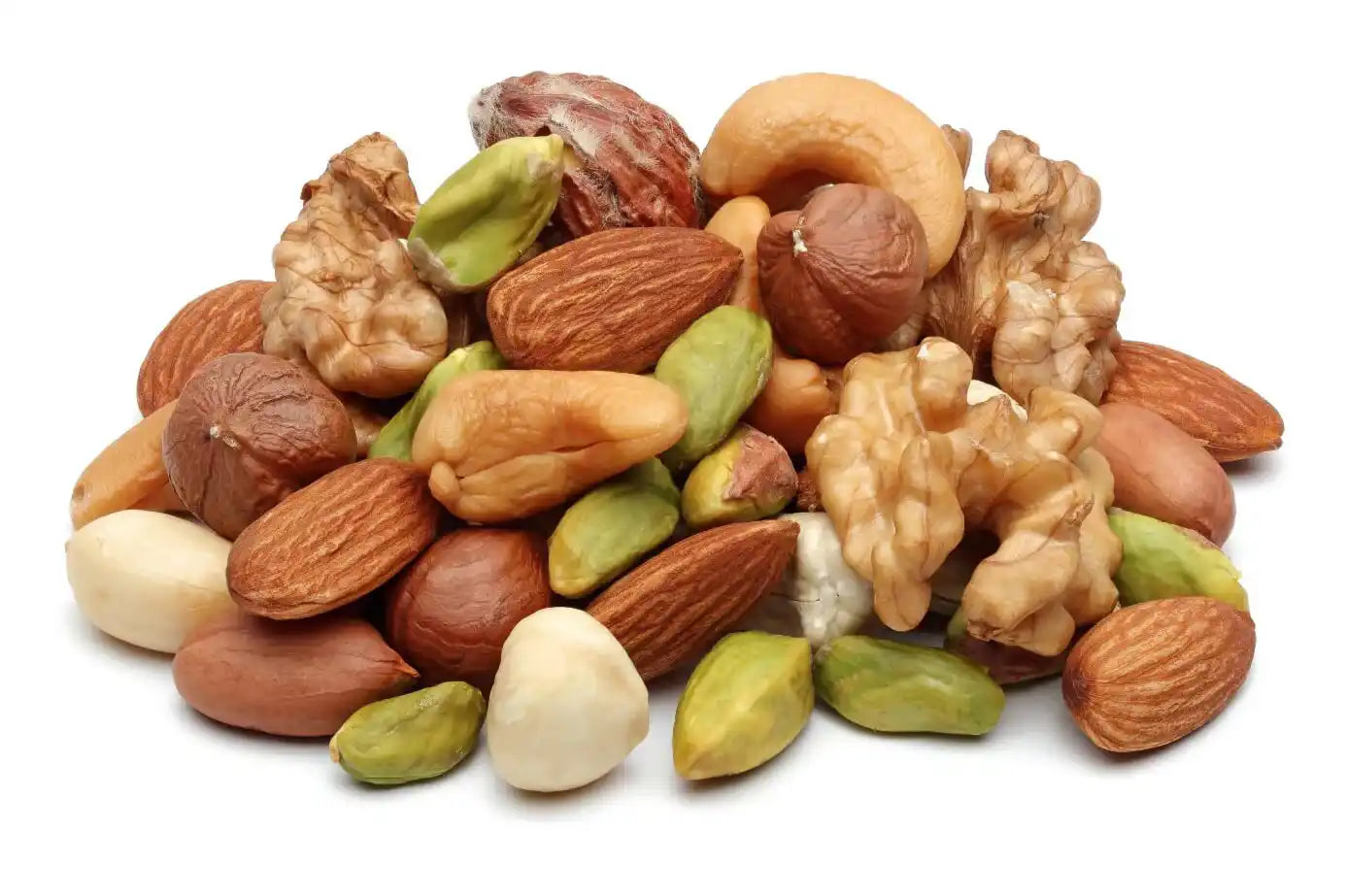
Explore Our Premium Nuts Collection
Discover our delicious selection of premium nuts, from crunchy almonds and creamy cashews to rich walnuts and mixed nuts. Naturally packed with protein, healthy fats, and essential nutrients, our nuts are perfect for everyday occasions.
Shop Premium NutsWhere to Buy the Best Almonds in the UK?
- At NutsOasis, natural almonds with skin start from £2.20 per 100g. Check the product page for the live price before you order.
- Skinless nuts cost more per kg because blanching adds a processing step, and sliced or ground versions add another. Compare per 100g rather than per bag, since larger packs usually win on that measure. A 1kg bag holds about 33 portions of 30g, so dividing the price by 33 shows what a daily handful really costs.
- Shelf life favours the skin. In a storage study of California almonds, natural kernels held steady while the blanched ones deteriorated much faster, which suggests the skin protects the oils. Keep both in an airtight container somewhere cool and dark; use the peeled bag first, and freeze the surplus.
Whichever bag you choose, a few checks on the pack save disappointment:
-
A best-before date that leaves you months, not weeks
-
The country of origin, with whole kernels listed rather than a mix of broken pieces
-
Plain "almonds" as the only ingredient, unless you're after a flavoured roast
-
A sealed bag or tub, and no sour or paint-like smell when you open it
Rancid almonds give themselves away with a smell of paint or old oil, a sharp, bitter aftertaste and a soft, rubbery bite. Bin them rather than hoping for the best. Sliced and ground almonds go off faster than whole kernels because more of the nut is exposed to air.
Buying online tends to give you fresher stock than a slow-moving shelf, so look for sellers who show best-before dates and origin. Shop almonds at NutsOasis.
Cheap Almonds Online The Complete Buying Guide in UK
Conclusion
The peeled vs unpeeled almonds choice is smaller than the internet makes it sound. Skin-on nuts bring more fibre and antioxidants and keep longer. Blanched ones give you sweetness, smoothness and a clean white finish for baking. Neither is unhealthy, and a 30g handful of either does the same nutritional work. Buy the one that fits what you're making, store it airtight, and freeze what you won't use. Ready to stock up? Browse almonds at NutsOasis.
FAQS
How many almonds should I eat a day?
About 30g, which is around 25 almonds. That's a standard handful and enough to get the nutrients without piling on calories. A small pot of 30g, weighed once, takes the guesswork out of it.
Do almonds cause weight gain?
Almonds do not cause weight gain when eaten in moderation as part of a balanced diet, and research shows they can even support weight management. Portion size still matters, because 30g carries around 175 calories.
Are almonds keto-friendly?
Yes, a 30g portion has about 2.7g of net carbohydrate once the fibre is subtracted, so a small handful fits within a typical keto allowance. Peeled and unpeeled work out almost the same.
Are almonds gluten-free?
Plain almonds are naturally gluten-free. Cross-contamination is possible, so coeliacs should look for packs labelled gluten-free.
Are flaked almonds the same as blanched ones?
Not exactly. Flaked almonds are thin slices, and most are cut from blanched kernels, but you can also buy flaked almonds with the skin left on.
Are almonds safe during pregnancy?
Yes, NHS advice is that nuts are fine in pregnancy unless you're allergic to them, so a 30g portion of plain almonds is a sensible snack.