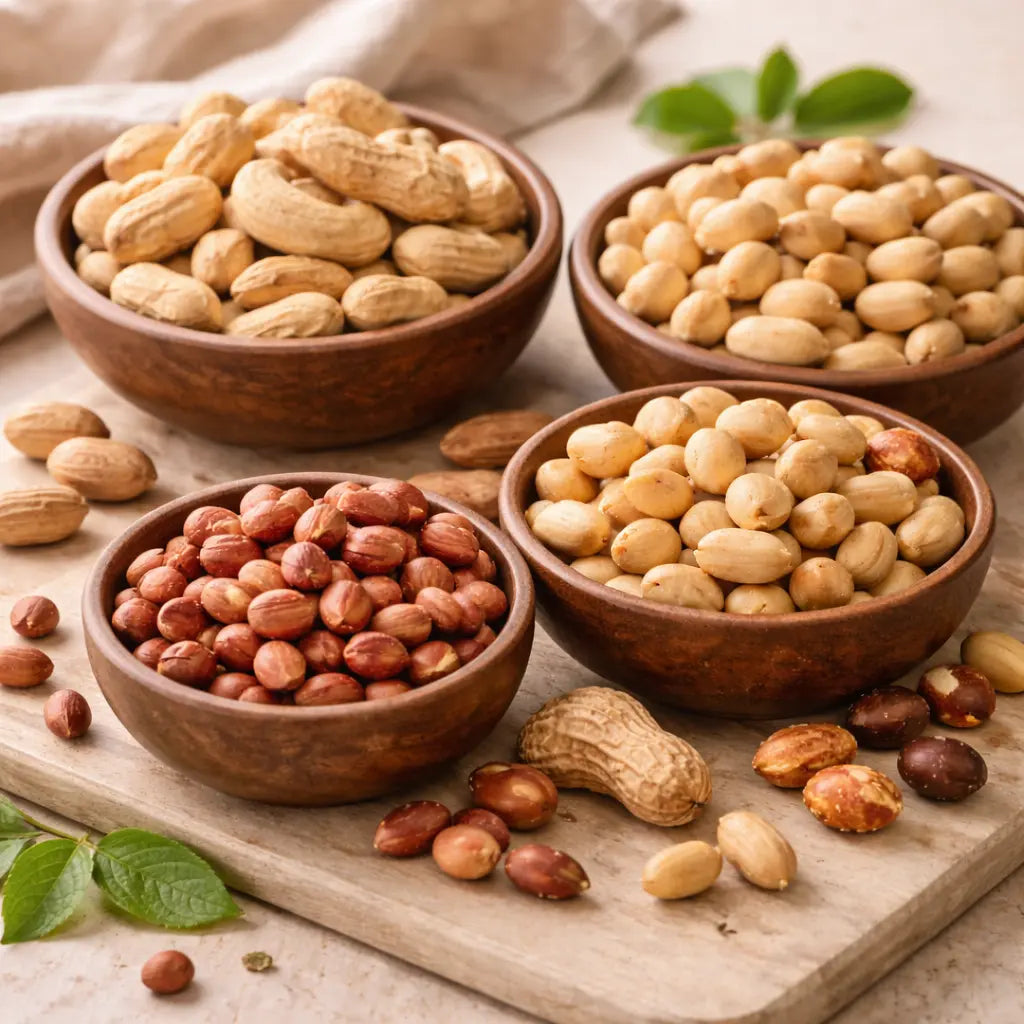
Types of Peanuts and How to Choose the Right One?
Most people do not think much about types of peanuts until they start buying them more often and realise they do not all taste the same. Some are smaller and sweeter, some are firmer, and some are simply better for cooking than casual snacking. Once you notice those differences, choosing becomes easier. It also makes the wider peanut market more intriguing, because shoppers are not all looking for the same thing. Somewhere in the middle of that, Nutsoasis offers a range that suits people who care about flavour as much as convenience.
What Are the Four Main Types of Peanuts?
-
Runner peanuts are the ones many people know without realising the name. They are fairly even in size, roast well, and have the familiar taste most shoppers expect.
-
Virginia peanuts are the large ones. They have more bite, more crunch, and often feel better for straightforward snacking than for mixing into recipes.
-
Spanish peanuts are smaller, but the flavor is stronger. They are often used in sweets, coated snacks, and blends where a richer peanut taste matters.
-
Valencia peanuts usually taste a little sweeter. Some people also find them softer and easier to eat by the handful.
-
These peanut types are not just different in appearance. They can also feel different in the mouth, which is often what people notice first.
-
In the wider peanut market, that is why people do not all buy the same kind. Some care about crunch, some about sweetness, and some about how the peanuts work in food.
Understanding the Size and Flavor Differences
| Point | Larger Peanuts | Smaller Peanuts |
|---|---|---|
| Size | Usually the first thing people notice. They feel more solid in the hand and look a bit more generous in a bowl. | Less showy, but not in a bad way. They tend to look lighter and a little less bulky. |
| Bite | If you like a heavy snack, the crunch is often clearer and more satisfying. | They can feel easier to nibble and less heavy, which some people actually prefer. |
| Flavour | The taste is often milder and cleaner, so they suit people who do not want the peanut flavour to take over. | These often bring more punch. The nuttiness comes through faster and stays on the palate longer. |
| Best for | A good fit for straightforward snacking, sharing bowls, or anyone who enjoys a more noticeable bite. | Often better for people who care more about flavour than appearance. |
| Overall feel | They seem fuller and a bit more filling. | They may look modest, but they are often the ones people remember after the first handful. |
Choosing the Right Type of Peanuts for Your Needs
Not everyone looks for the same kind of peanut snack, which is why these four options suit different tastes, moods, and everyday moments in very different ways:
These are ideal if you fancy something sweet but do not want to lose the proper peanut taste. They feel more like a treat, especially when you want a snack that is a bit more fun than the usual salted kind.
Roasted Salted Red Skin Peanuts
If you like simple snacks that do not need much explanation, these are an easy choice. They have that classic roasted flavour, a good crunch, and a slightly more natural feel because of the red skin.
Dark Chocolate Covered Peanuts
These suit people who want something richer and a little more indulgent. The peanut keeps the bite from becoming too sweet, so they work well when you want a snack that feels more satisfying.
These are better for anyone who likes a bit of heat in their snacks. They are crunchy, savoury, and have that sort of flavour that keeps you reaching back into the bag.
How to Buy Peanuts Online in the UK
-
Think about how they will actually be eaten. A desk snack, a film-night bowl, or a baking ingredient all call for different choices.
-
Do not rush the photos. One pack may look like another, but coating, roast, and texture can be entirely different once opened.
-
Read the full name properly. Salted, caramelized, chocolate-covered, and chilli versions may all sit close together, which makes quick clicks risky.
-
Pack size matters more than people admit. Some bags vanish in two sittings, while others are better value for regular buyers.
-
Ingredients are worth a glance, especially if you are avoiding extra sugar, stronger flavorings, or anything a child may not like.
-
Reviews help when they sound normal. Comments about crunch, freshness, or whether a flavour felt too strong are usually the most useful.
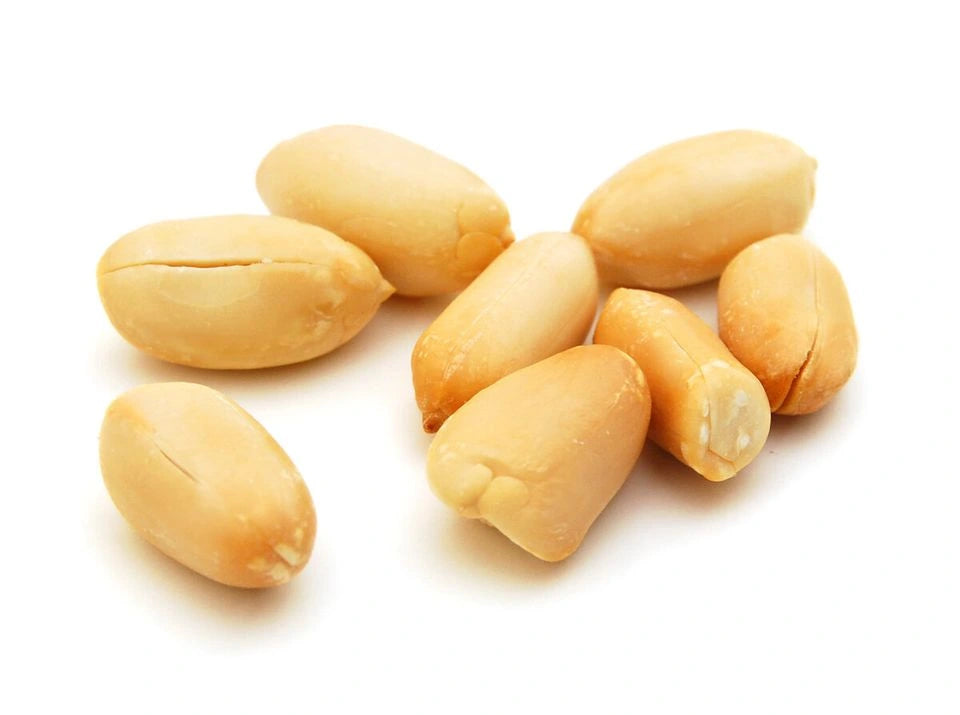
Explore Our Peanuts Collection
Enjoy the rich taste of our premium peanuts collection. From perfectly roasted and salted peanuts to natural and flavored options, these crunchy snacks are ideal for everyday munching or adding extra flavor to your favorite dishes.
Shop PeanutsCommon Misconceptions About Peanuts
-
Many people assume all peanuts taste more or less the same, but once you try different types of peanuts, the differences become much easier to notice.
-
Another common idea is that bigger peanuts must always be better. In reality, some smaller ones have a deeper flavour and can be more enjoyable.
-
Peanuts are often used in cooking, baking, sauces, and sweets, not just for snacking.
-
Some shoppers believe plain peanuts are always boring, but that usually changes once they try a well-roasted batch with good texture.
-
There is also a habit of judging quality by appearance alone. A peanut that looks simple can still have a richer taste than expected.
-
Another misunderstanding is that all flavoured peanuts are overly sweet or artificial, which is not always true.
-
Some assume peanuts are only bought casually, but many people choose them cautiously.
-
In the end, peanuts are often more varied, more useful, and more enjoyable than people first think.
What are the best types of peanuts for health?
-
Plain peanuts or lightly roasted ones tend to make more sense than options with heavy coatings.
-
Dry roasted peanuts are often a practical middle ground because they still have flavour, but do not feel as loaded as sweeter or more heavily seasoned snacks.
-
Unsalted or lightly salted options are usually easier for everyday eating, especially for people trying to keep things a bit more balanced.
-
Peanuts with chocolate, caramel, or crunchy coatings can still be enjoyed, but most people would treat those more as a snack than a regular staple.
-
Portion size matters just as much as the product itself. Even among different peanut types, the healthiest choice can feel less healthy when the handful turns into half the bag.
-
It also helps to look past the peanut market hype and keep things simple. A shorter ingredient list is often indicative of a healthier product.
Are peanuts safe for children?
-
Yes, they can be. For most children, peanuts are not automatically a problem.
-
What worries parents first is usually not the different types of peanuts. It is the child's age and the way the peanut is given.
-
Whole peanuts are not a smart choice for very young children, simply because they can be hard to chew properly and easy to choke on.
-
That is why many parents feel more comfortable starting with peanuts in a softer form instead of giving whole nuts straight away.
-
Allergy is the other thing people think about, and that is understandable. If a child has reacted badly to food before, most parents naturally become more careful.
-
In real life, the issue is usually less about the peanut itself and more about timing, texture, and paying attention to how the child responds.
-
So yes, peanuts can be safe for children, but the sensible approach is to introduce them carefully rather than casually.
Can Peanuts Be Part of a Sustainable Diet?
-
Yes, peanuts are a good choice for those who want something simple, filling, and easy to store.
-
They do not need much to be useful. A small handful can work as a snack, and they can also be added to meals without much effort.
-
For many people, that matters. Foods that are easy to store, easy to use, and less likely to be wasted often fit better into everyday eating.
-
Peanuts also suit different budgets, which is another reason they are often seen as a practical choice rather than a luxury one.
-
Whether someone buys plain peanuts or flavored types of peanuts, the bigger point is that they can be used in a flexible way at home.
-
They work for snacking, lunchboxes, baking, and simple cooking, so one product can cover more than one need.
-
In the end, a sustainable diet is not only about big ideas. Often, it is also about choosing foods people will actually buy, keep, and eat regularly.
Conclusion
Choosing between different types of peanuts is not really about following rules. It is more about knowing what you enjoy and what works for the way you eat. Some people reach for something plain and salty, while others would always rather have a sweeter or more punchy snack. That is perfectly fine. The good thing is that once you understand the difference, shopping gets easier and the choice feels more personal. For anyone in the UK who wants to look around without feeling overwhelmed, Nutsoasis is a sensible place to begin.
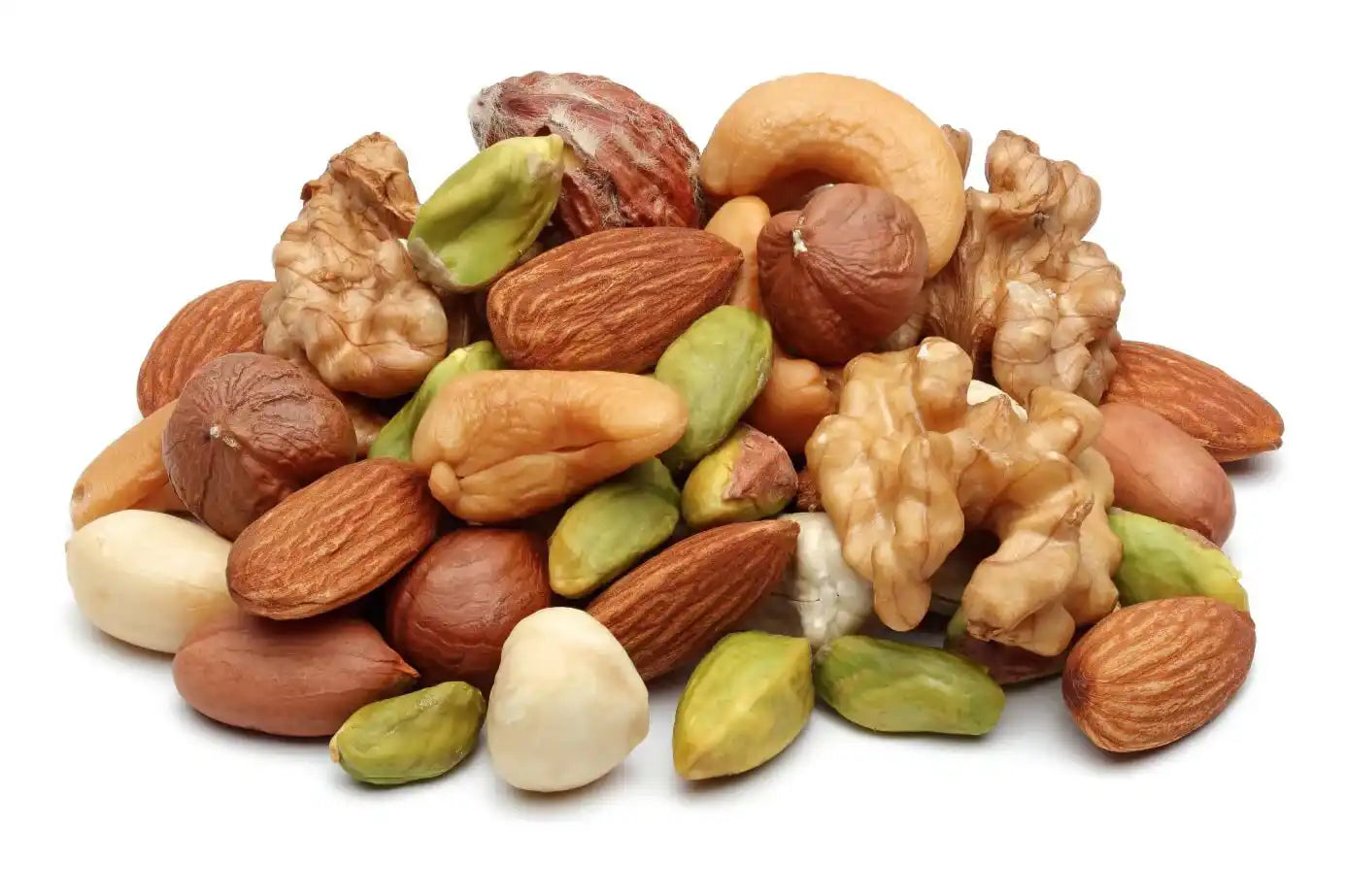
Explore Our Nuts Collection
Discover a premium selection of high-quality nuts, including almonds, cashews, pistachios, and more. Perfect for healthy snacking, cooking, or boosting your daily nutrition with natural energy.
Shop NutsFAQs
Which type of peanut is best for snacking?
That depends on your taste. Some people prefer larger peanuts for the crunch, while others like smaller ones for the stronger flavour.
Do peanuts really taste different from one type to another?
Yes, they do. The difference is usually in the flavour strength, texture, and how satisfying they feel to eat.
Are plain peanuts better than flavoured peanuts?
Not always. Plain peanuts are simpler, but flavored ones can be more enjoyable when you want something a bit different.
Which peanuts are better for cooking?
Smaller peanuts are often easier to use in recipes because the flavour comes through well and they mix in easily.
How do I choose the right peanuts online?
Think about what you want them for first. That usually makes it much easier to choose the right pack.